Anúncios
Coastal erosion threatens millions of lives worldwide, demanding urgent action and innovative thinking to protect our vulnerable shorelines and the communities that depend on them.

🌊 Understanding the Growing Threat to Our Coastlines
Coastal erosion has emerged as one of the most pressing environmental challenges of the 21st century. As sea levels rise and storm patterns intensify, communities along shorelines face unprecedented threats to their homes, livelihoods, and cultural heritage. The problem is no longer limited to remote beaches or uninhabited stretches of coastline—it now affects densely populated areas, critical infrastructure, and economically vital regions across the globe.
Anúncios
The statistics paint a sobering picture. According to recent research, approximately 40% of the world’s population lives within 100 kilometers of the coast, making coastal erosion a problem that affects billions of people either directly or indirectly. In the United States alone, coastal erosion costs an estimated $500 million annually in property damage and protective measures. From the eroding cliffs of California to the disappearing beaches of the Outer Banks, no coastline remains immune to these challenges.
What makes localized coastal erosion particularly challenging is its site-specific nature. Unlike broad-scale climate phenomena, erosion patterns vary dramatically based on local geography, wave action, sediment composition, and human activity. This means that solutions must be equally tailored and innovative, taking into account the unique characteristics of each affected area.
Anúncios
The Science Behind Coastal Erosion: More Than Just Waves
Understanding coastal erosion requires examining multiple interconnected factors that work together to reshape our shorelines. Natural processes such as wave action, tidal movements, and longshore currents have always influenced coastal landscapes. However, human-induced climate change has accelerated these natural processes to alarming rates.
Rising sea levels, one of the most direct consequences of global warming, increase the reach and power of wave action against coastal structures and natural barriers. When combined with more frequent and intense storms, the result is dramatically accelerated erosion. Additionally, subsidence—the gradual sinking of land—compounds the problem in many regions, effectively doubling the rate of relative sea level rise.
Human activities have also played a significant role in disrupting natural coastal processes. The construction of dams on rivers reduces sediment flow to coastlines, starving beaches of the material they need to naturally replenish themselves. Coastal development removes natural buffers like dunes and wetlands, while hardened structures like seawalls can redirect wave energy, sometimes worsening erosion in adjacent areas.
The Ripple Effect: Economic and Social Impacts
The consequences of coastal erosion extend far beyond the physical loss of land. Economically, the impact is staggering. Tourism-dependent communities watch their beaches disappear, taking with them the economic engine that supports local businesses and employment. Property values plummet as homes inch closer to unstable cliff edges or face increased flood risk. Infrastructure damage requires costly repairs or complete relocation of roads, utilities, and public facilities.
Socially and culturally, the effects run even deeper. Coastal communities often have rich histories and strong cultural identities tied to their maritime heritage. When erosion threatens these areas, it doesn’t just endanger buildings—it threatens entire ways of life, traditional practices, and community bonds forged over generations. Indigenous communities, in particular, face existential threats as ancestral lands disappear beneath the waves.
🛠️ Nature-Based Solutions: Working With Coastal Ecosystems
One of the most promising approaches to combating coastal erosion involves harnessing the power of natural systems. Nature-based solutions, also called “green infrastructure” or “living shorelines,” work with coastal ecosystems rather than against them, providing erosion protection while simultaneously offering ecological benefits.
Living shorelines represent a paradigm shift in coastal management. Instead of installing hard structures like seawalls, these solutions use plants, sand, and natural materials to stabilize shorelines. Marsh grasses, for example, have extensive root systems that hold sediment in place while their above-ground vegetation dissipates wave energy. These systems are remarkably resilient, able to adapt to changing conditions and even grow upward with rising sea levels.
Mangrove Restoration: The Coastal Superhero 🌿
Mangrove forests have emerged as one of nature’s most effective coastal protection systems. These remarkable trees thrive in saltwater environments and provide multiple layers of defense against erosion. Their complex root systems stabilize sediments and reduce wave energy by up to 66%, according to studies. Above the waterline, their dense canopy breaks wind and storm surge, while simultaneously providing critical habitat for countless marine species.
Successful mangrove restoration projects in countries like Vietnam, Indonesia, and the Philippines have demonstrated both the ecological and economic value of this approach. In Vietnam’s Mekong Delta, restored mangrove forests saved communities millions of dollars in avoided damage during typhoon season while creating sustainable livelihoods through aquaculture and ecotourism.
Oyster Reefs: Building Barriers One Shell at a Time
Oyster reef restoration has gained significant traction as an innovative erosion control measure. Oysters naturally aggregate into reef structures that reduce wave energy, trap sediment, and create habitat for other marine life. These living breakwaters continually grow and repair themselves, providing a sustainable long-term solution.
Projects along the Gulf Coast and Atlantic seaboard have successfully used oyster reef restoration to protect vulnerable shorelines. The added benefit? Oysters filter water, improving overall coastal water quality while providing economic opportunities through sustainable harvesting programs.
Engineered Solutions: When Technology Meets Coastal Protection
While nature-based solutions offer tremendous promise, some situations require more intensive engineering interventions. The key is developing technologies that minimize environmental impact while effectively protecting coastal areas. Modern engineering approaches increasingly seek to blend functionality with ecological sensitivity.
Smart Seawalls and Adaptive Structures
Traditional seawalls often created more problems than they solved, reflecting wave energy and causing erosion in adjacent areas. Next-generation seawalls incorporate innovative designs that dissipate rather than reflect wave energy. These structures feature textured surfaces, integrated tide pools, and vegetation pockets that provide ecological benefits while maintaining protective functions.
Some cutting-edge designs include “breathing seawalls” with 3D-printed tiles that mimic natural rock formations, creating habitat for marine organisms while protecting the shoreline. Others incorporate smart sensors that monitor structural integrity and environmental conditions in real-time, enabling predictive maintenance and adaptive management.
Beach Nourishment: Bringing Back the Sand
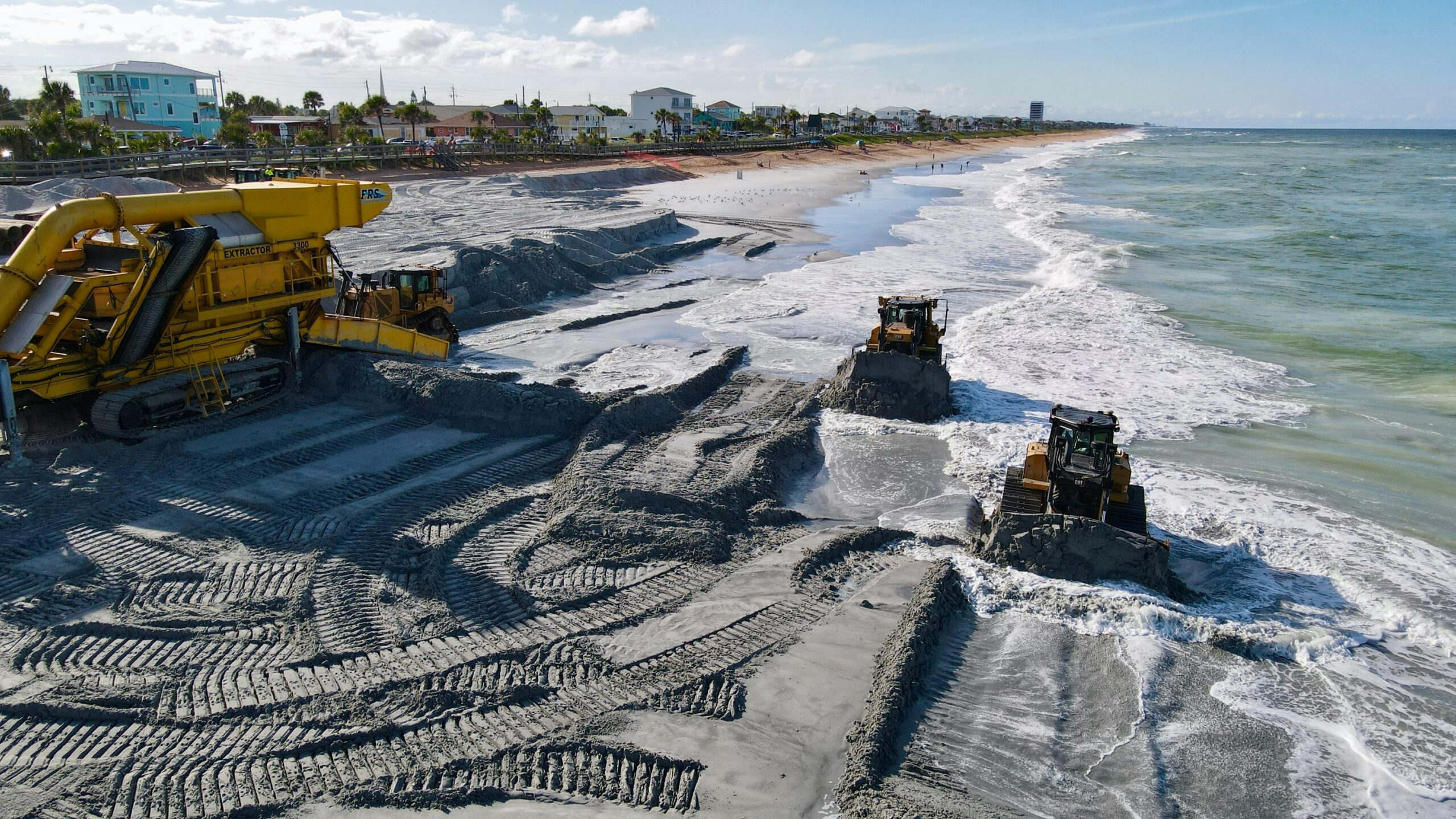
Beach nourishment involves adding sand to eroding beaches, rebuilding the natural buffer against wave action. While this approach has been used for decades, modern techniques have become more sophisticated and environmentally conscious. Advanced modeling helps engineers select appropriate sand sources and placement strategies that work with natural coastal processes rather than against them.
Successful beach nourishment programs require ongoing maintenance and monitoring, as the added sand gradually disperses through natural processes. However, when properly executed, these projects provide immediate protection while supporting tourism and recreation, often paying for themselves through increased economic activity.
📊 Community-Driven Approaches: Local Knowledge, Global Impact
Perhaps the most innovative solutions to coastal erosion emerge when communities themselves take the lead. Local residents possess invaluable knowledge about their coastlines, understanding subtle patterns and changes that outside experts might miss. Community-driven initiatives combine this traditional knowledge with modern science, creating solutions uniquely suited to local conditions.
Participatory planning processes ensure that erosion control measures align with community values and priorities. Coastal residents become active stewards rather than passive recipients of externally imposed solutions. This approach has proven particularly effective in developing nations, where resource constraints make community involvement essential for long-term success.
Monitoring and Citizen Science Initiatives
Advanced monitoring technologies have become increasingly accessible, enabling communities to track erosion patterns and evaluate the effectiveness of protection measures. Drone surveys, smartphone apps for beach profiling, and community-based observation networks generate valuable data that informs adaptive management strategies.
Citizen science programs engage residents in collecting and analyzing coastal data, building scientific literacy while creating comprehensive datasets that would be prohibitively expensive if collected by professionals alone. These programs foster a sense of ownership and investment in coastal protection efforts, increasing the likelihood of long-term success.
Integrating Multiple Strategies: The Hybrid Approach 🔄
The most effective coastal protection programs rarely rely on a single solution. Instead, they integrate multiple approaches in a coordinated strategy tailored to specific local conditions. This hybrid approach combines the ecological benefits of nature-based solutions with the immediate protection offered by engineering interventions, while incorporating community knowledge and participation throughout.
For example, a comprehensive coastal protection plan might include offshore breakwaters to reduce wave energy, behind which marsh grasses are planted to stabilize sediments and provide habitat. Beach nourishment might supplement these measures in recreational areas, while community monitoring programs track effectiveness and inform adaptive management decisions.
Adaptive Management: Flexibility for an Uncertain Future
Given the uncertainty surrounding future climate scenarios and coastal changes, adaptive management approaches are essential. Rather than implementing fixed solutions, adaptive management embraces flexibility, regularly assessing performance and adjusting strategies as conditions change. This approach acknowledges that coastal protection is not a one-time project but an ongoing process requiring sustained attention and resources.
Successful adaptive management requires robust monitoring systems, regular evaluation cycles, and the institutional flexibility to modify approaches when necessary. It also demands adequate funding mechanisms that support long-term maintenance and adaptation rather than just initial construction.
🌍 Policy and Funding: Creating Enabling Frameworks
Even the most innovative technical solutions will fail without supportive policy frameworks and adequate funding. Governments at all levels must develop coastal management policies that encourage sustainable approaches, facilitate coordination among stakeholders, and ensure equitable distribution of resources.
Effective coastal protection requires long-term investment horizons that extend beyond typical political cycles. Innovative funding mechanisms, such as coastal resilience bonds, public-private partnerships, and payments for ecosystem services, can help generate the sustained resources needed for comprehensive coastal protection programs.
Regulatory frameworks must balance property rights with public interests, a particularly challenging task in densely developed coastal areas. Some jurisdictions have implemented managed retreat policies, strategically relocating structures away from the most vulnerable areas. While controversial, these approaches may be necessary in some locations where protection measures prove ineffective or prohibitively expensive.
Looking Forward: Innovation and Resilience on the Coast
The challenge of coastal erosion demands continued innovation, research, and investment. Emerging technologies offer exciting possibilities, from artificial reefs constructed using 3D printing to bio-engineered organisms that accelerate sediment accumulation. Machine learning algorithms increasingly help predict erosion patterns and optimize protection strategies.
However, technology alone cannot solve this problem. Success requires integrating technical innovation with ecological understanding, community engagement, and political will. It demands acknowledging that some changes are inevitable while working vigorously to protect what can be saved and adapting to what cannot.
Coastal communities worldwide are demonstrating remarkable resilience and creativity in facing these challenges. From small island nations pioneering nature-based solutions to megacities investing in comprehensive protection infrastructure, diverse approaches are being tested, refined, and shared. This global exchange of knowledge and experience accelerates progress, helping communities learn from both successes and failures elsewhere.
Building a Sustainable Coastal Future Together 🤝
Protecting our shores from coastal erosion is not merely a technical challenge—it is fundamentally about preserving communities, cultures, and ways of life. It requires us to think creatively, act decisively, and work collaboratively across disciplines, borders, and generations. The solutions exist, from harnessing the power of coastal ecosystems to developing innovative engineering approaches and empowering communities to lead their own protection efforts.
Success depends on sustained commitment and investment. Coastal protection cannot be treated as an afterthought or a short-term project. It requires comprehensive strategies that integrate multiple approaches, adapt to changing conditions, and maintain focus across decades. It demands that we value our coastlines not just for their economic contribution but for their ecological importance and cultural significance.
Every community facing coastal erosion has unique challenges, but none faces them alone. The growing global network of coastal scientists, engineers, planners, and residents shares knowledge, develops innovative solutions, and supports one another in this vital work. By learning from successes and failures, embracing both traditional knowledge and cutting-edge technology, and maintaining unwavering commitment to coastal protection, we can preserve these vital spaces for future generations.
The waves will continue to reach our shores, but with innovation, collaboration, and determination, we can ensure that our coastal communities not only survive but thrive in the face of this challenge. The time for action is now, and the tools for success are increasingly within our reach. Our shores are worth protecting, and together, we have the power to do exactly that.