Anúncios
Open-source tools are revolutionizing marine modeling workflows, offering researchers and professionals unprecedented access to powerful computational resources without breaking the bank. 🌊

Why Marine Modeling Demands Better Tools Now More Than Ever
The marine environment faces unprecedented challenges in the 21st century. Climate change, pollution, overfishing, and habitat destruction require sophisticated modeling approaches to understand, predict, and mitigate their impacts. Traditional proprietary software solutions often come with hefty price tags and licensing restrictions that limit collaboration and innovation across research institutions, government agencies, and conservation organizations.
Anúncios
Marine modeling encompasses everything from ocean circulation patterns and wave dynamics to ecosystem simulations and coastal erosion predictions. These complex systems require computational tools that can handle massive datasets, perform intricate calculations, and produce visualizations that communicate findings effectively to stakeholders. Open-source solutions have emerged as game-changers in this field, democratizing access to world-class modeling capabilities.
The Open-Source Advantage in Marine Science 🔬
Open-source software brings several compelling advantages to marine modeling workflows. First and foremost is transparency. When source code is publicly available, researchers can examine exactly how calculations are performed, verify methodologies, and ensure reproducibility—a cornerstone of scientific integrity. This level of transparency is simply impossible with proprietary black-box solutions.
Anúncios
Cost-effectiveness represents another significant benefit. Research budgets are perpetually stretched thin, and eliminating expensive software licenses frees up resources for field work, equipment, and personnel. Open-source tools allow even small research groups and developing nations to participate in cutting-edge marine science without financial barriers.
The collaborative nature of open-source development accelerates innovation. When developers worldwide contribute improvements, bug fixes, and new features, progress happens exponentially faster than within closed development teams. This community-driven approach ensures that tools evolve to meet real-world needs rather than corporate roadmaps.
Essential Open-Source Platforms for Marine Modeling
Python: The Swiss Army Knife of Marine Science 🐍
Python has become the lingua franca of scientific computing, and marine modeling is no exception. Its extensive ecosystem of libraries makes it indispensable for modern workflows. NumPy and SciPy handle numerical computations efficiently, while Pandas excels at manipulating large datasets—a common requirement when working with oceanographic observations or model outputs.
Matplotlib and Seaborn provide publication-quality visualization capabilities, essential for communicating complex marine phenomena. For interactive exploration of data, Jupyter notebooks offer an ideal environment where code, results, and explanatory text coexist seamlessly. This format has become standard for sharing reproducible research.
Specialized marine libraries built on Python include Xarray for working with multi-dimensional labeled datasets (perfect for netCDF ocean model outputs), Cartopy for creating beautiful maps with marine data overlays, and GSW-Python implementing the Gibbs SeaWater Oceanographic Toolbox for accurate calculation of seawater properties.
R: Statistical Powerhouse for Marine Ecology
While Python dominates physical oceanography and numerical modeling, R remains unmatched for statistical analysis of marine ecological data. Its comprehensive statistical packages make it ideal for analyzing fisheries data, species distribution modeling, and biodiversity assessments.
The tidyverse collection of packages provides intuitive tools for data manipulation and visualization. Marine ecologists particularly appreciate ggplot2’s flexibility for creating complex multi-panel figures that effectively communicate spatial and temporal patterns in ecological datasets.
Packages like vegan (vegetation analysis), mgcv (generalized additive models), and spatstat (spatial statistics) address specific analytical needs common in marine research. The ability to seamlessly integrate these specialized tools within reproducible workflows makes R invaluable for evidence-based marine management.
Open-Source Numerical Models Transforming Ocean Science 🌊
ROMS: Regional Ocean Modeling System
ROMS stands as one of the most widely adopted open-source ocean circulation models worldwide. This three-dimensional, free-surface model uses terrain-following coordinates, making it particularly effective for coastal and estuarine environments where bathymetry varies dramatically.
The model’s modular design allows researchers to customize physics parameterizations, boundary conditions, and forcing mechanisms to suit specific study areas. ROMS excels at simulating processes from individual estuaries to entire ocean basins, with spatial resolutions ranging from meters to kilometers depending on computational resources and scientific objectives.
Community support for ROMS is exceptional, with active forums, comprehensive documentation, and numerous published studies demonstrating applications across diverse marine environments. This wealth of shared knowledge dramatically reduces the learning curve for new users and facilitates troubleshooting when challenges arise.
Delft3D: Integrated Modeling Suite
Developed by Deltares, Delft3D offers a comprehensive open-source suite for modeling hydrodynamics, sediment transport, morphology, waves, and water quality in coastal, river, and estuarine environments. Its integrated approach allows researchers to study coupled processes rather than treating them in isolation.
The flexible grid system supports both structured and unstructured meshes, optimizing computational efficiency while accurately representing complex coastlines and bathymetry. This flexibility proves essential when modeling intricate harbor configurations or winding tidal channels where grid alignment significantly impacts results.
Delft3D’s modular structure means users can activate only the components relevant to their research questions, keeping simulations streamlined. The software’s ability to couple with morphological modules makes it particularly valuable for long-term coastal evolution studies and engineering applications like dredging impact assessments.
Visualization Tools That Bring Marine Data to Life 📊
Raw model output and observational data tell incomplete stories without effective visualization. Open-source tools have evolved to handle the unique challenges of marine data visualization, from representing four-dimensional ocean currents to creating compelling animations of temporal changes.
ParaView excels at visualizing large-scale three-dimensional datasets from ocean models. Its parallel processing capabilities enable interactive exploration of simulation results that would overwhelm simpler visualization software. Researchers can create volume renderings of temperature fields, streamlines following current patterns, and sliced views revealing internal ocean structure.
QGIS brings geographic information system capabilities to marine applications without the cost of proprietary GIS software. Marine researchers use it to overlay ship tracks, satellite observations, model outputs, and bathymetry data, creating comprehensive spatial analyses. The ability to perform sophisticated geoprocessing operations makes QGIS essential for marine spatial planning and habitat mapping initiatives.
Version Control and Collaboration: Git for Marine Modelers
Modern marine modeling workflows increasingly embrace software development best practices, with version control sitting at the foundation. Git enables researchers to track every change to model configurations, analysis scripts, and documentation, creating a complete history of project evolution.
Platforms like GitHub and GitLab facilitate collaboration among geographically distributed research teams. Multiple scientists can work on different aspects of a modeling study simultaneously, with changes merged systematically rather than through chaotic email exchanges of “final_version_2_revised_FINAL.txt” files.
Version control proves invaluable when models produce unexpected results. Rather than wondering what changed between working and broken versions, researchers can systematically review modifications and pinpoint exactly when problems appeared. This capability saves countless hours of troubleshooting and prevents loss of progress.
Building Reproducible Workflows with Containerization 🐳
Reproducibility remains a persistent challenge in computational marine science. A model that runs perfectly on one system may fail on another due to different library versions, operating system quirks, or missing dependencies. Containerization technologies like Docker address this problem by packaging software with all its dependencies in portable containers.
Containers ensure that anyone can replicate a study’s computational environment exactly, regardless of their underlying operating system or installed software. This capability proves critical for peer review, where reviewers may need to verify results, and for long-term preservation of research methods.
Conda and similar package managers complement containerization by creating isolated environments for different projects. A researcher might maintain separate environments for operational forecasting, climate projection analysis, and manuscript preparation, each with precisely the library versions required for that workflow without conflicts.
Cloud Computing: Scaling Marine Models Without Hardware Investments ☁️
High-resolution marine models demand substantial computational resources—more than most research groups can afford to purchase and maintain. Cloud computing platforms democratize access to high-performance computing, allowing researchers to rent powerful resources only when needed rather than investing in expensive hardware that sits idle between simulations.
Open-source tools integrate seamlessly with cloud platforms. Researchers can deploy Python-based analysis workflows on cloud infrastructure, process terabytes of satellite ocean color data, or run ensemble model simulations exploring parameter uncertainty—all without touching physical hardware.
The pay-as-you-go model of cloud computing aligns perfectly with grant-funded research cycles. Intensive computing occurs during active project phases, while costs drop during writing and revision periods. This flexibility prevents wasteful overinvestment in computing infrastructure while ensuring adequate resources when needed most.
Machine Learning Meets Marine Modeling 🤖
Artificial intelligence and machine learning are transforming marine science, and open-source frameworks lead this revolution. TensorFlow and PyTorch enable researchers to develop neural networks that identify species from underwater imagery, predict algal bloom timing from environmental conditions, or emulate expensive numerical models at a fraction of the computational cost.
Machine learning excels at finding patterns in complex, high-dimensional marine datasets where traditional statistical approaches struggle. Convolutional neural networks classify benthic habitats from seafloor imagery with superhuman accuracy and consistency. Recurrent networks capture temporal dependencies in time-series data like tidal predictions or fish migration patterns.
The synergy between process-based numerical models and data-driven machine learning approaches offers exciting possibilities. Hybrid systems combine physical understanding encoded in traditional models with machine learning’s pattern recognition capabilities, potentially delivering more accurate and efficient marine predictions.
Community Resources and Learning Pathways 📚
Transitioning to open-source workflows requires learning new tools and approaches, but abundant community resources ease this journey. Online forums, documentation, tutorials, and courses provide pathways for marine scientists at all skill levels.
Software Carpentry and similar organizations offer workshops specifically designed for researchers, teaching version control, programming fundamentals, and data management skills. These workshops recognize that scientists aren’t professional programmers and focus on immediately applicable skills rather than computer science theory.
Active online communities surrounding major open-source tools provide invaluable support. Stack Overflow answers programming questions, specialized forums discuss model configuration challenges, and GitHub repositories share working examples of complex workflows. This collective knowledge vastly exceeds what any single proprietary software vendor could provide.
Overcoming Common Adoption Barriers
Despite clear advantages, some marine researchers hesitate to embrace open-source workflows. Concerns about steep learning curves, lack of commercial support, and compatibility with existing workflows create inertia favoring familiar proprietary tools.
The learning curve concern is legitimate but often overstated. Modern open-source tools prioritize usability, and incremental adoption strategies minimize disruption. Researchers can begin by using open-source software for specific tasks—perhaps data visualization or statistical analysis—while maintaining familiar tools for other workflow components. Gradual expansion naturally follows as comfort grows.
While open-source software lacks commercial support contracts, community support often proves more responsive and knowledgeable. Questions posted to forums frequently receive multiple detailed responses within hours from developers and experienced users worldwide. This crowdsourced expertise exceeds what most commercial support desks provide.
Future Horizons: Where Open-Source Marine Modeling is Headed 🚀
The trajectory of open-source marine modeling points toward increasingly integrated, accessible, and powerful workflows. Efforts to create seamless pipelines connecting observations, models, analysis, and visualization will reduce technical barriers, allowing researchers to focus on scientific questions rather than software plumbing.
Improved interoperability between different modeling systems will enable more comprehensive Earth system simulations. Coupling ocean models with atmospheric, ice, biogeochemical, and ecological components provides holistic understanding of marine environments and their responses to environmental change.
Artificial intelligence integration will accelerate, with machine learning models becoming standard components of operational forecasting systems and research workflows. Automated quality control, intelligent data assimilation, and accelerated model development cycles will become routine capabilities accessible to all marine researchers.
Making the Transition: Practical Steps Forward
For marine scientists ready to embrace open-source workflows, a strategic approach ensures smooth transitions. Start by identifying workflow bottlenecks or pain points where open-source alternatives offer clear advantages. Perhaps data visualization consumes excessive time, or statistical analysis capabilities feel limiting—these represent ideal entry points.
Invest time in foundational skills that pay dividends across all open-source tools. Learning basic programming in Python or R, understanding version control with Git, and developing comfort with command-line interfaces provide transferable skills applicable to countless specific tools and workflows.
Connect with the community early and often. Attend workshops, join online forums, and don’t hesitate to ask questions. The open-source marine science community welcomes newcomers enthusiastically, recognizing that today’s beginners become tomorrow’s contributors and mentors.
Remember that transitioning workflows is iterative, not instantaneous. Expect periods of lower productivity while learning new approaches, but trust that investments in open-source skills will yield long-term benefits in efficiency, capability, and collaboration potential.
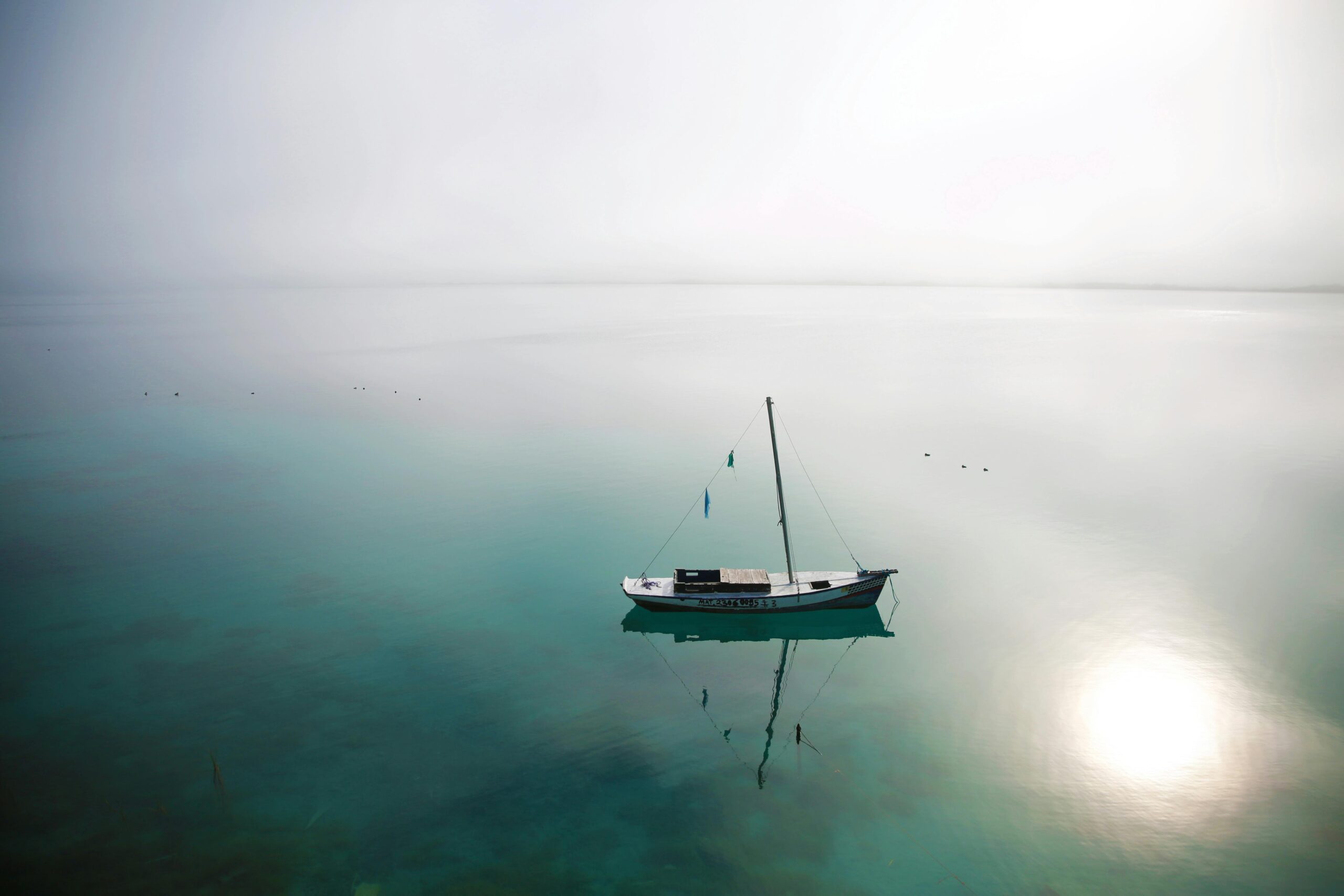
Charting Your Course Toward Open-Source Excellence 🧭
The marine science community stands at an inflection point. Open-source tools have matured from promising alternatives to essential infrastructure for cutting-edge research. The question is no longer whether to adopt open-source workflows but how quickly and strategically to make the transition.
By embracing open-source platforms, marine researchers gain more than free software—they join global communities dedicated to advancing ocean science through collaboration, transparency, and shared innovation. These workflows enhance reproducibility, accelerate discovery, and democratize access to sophisticated modeling capabilities that were once exclusive privileges of well-funded institutions.
The ocean challenges facing humanity demand our best science, delivered urgently and accessibly. Open-source marine modeling workflows provide the tools needed to meet this moment, offering smooth sailing toward a future where understanding and protecting marine environments is a truly global endeavor. The voyage begins with a single commit, a first Python script, or an initial model run—start today and discover how open-source tools can transform your marine research. 🌊