
Anúncios
Every year, billions of animals embark on extraordinary journeys across continents and oceans, driven by ancient rhythms encoded in their very DNA. 🌍

The natural world operates on invisible timetables, orchestrated by seasonal changes, temperature shifts, and celestial cues that have guided wildlife for millions of years. From the thundering hooves of wildebeest crossing African plains to salmon fighting upstream against powerful currents, these cyclical patterns represent some of nature’s most spectacular phenomena. Understanding seasonal migration and spawning cycles offers profound insights into ecosystem health, species survival, and the delicate balance that sustains life on our planet.
Anúncios
These biological rhythms aren’t merely fascinating curiosities—they’re essential survival mechanisms that have evolved over countless generations. Animals time their movements and reproductive activities to coincide with optimal conditions for feeding, breeding, and raising offspring. As climate patterns shift and human activity increasingly impacts natural habitats, comprehending these cycles becomes ever more critical for conservation efforts worldwide.
🦅 The Science Behind Seasonal Migration Patterns
Migration represents one of the most energy-intensive activities in the animal kingdom, yet species across diverse taxonomic groups undertake these journeys with remarkable precision. The underlying mechanisms triggering migration involve complex interactions between environmental cues and internal biological clocks known as circannual rhythms.
Anúncios
Photoperiod—the length of daylight hours—serves as the primary trigger for many migratory species. As days lengthen or shorten, specialized photoreceptors detect these changes, initiating hormonal cascades that prepare animals physiologically for their upcoming journey. These preparations include hyperphagia (increased feeding to build fat reserves), changes in metabolism, and even alterations in organ size to optimize flight or swimming efficiency.
Temperature fluctuations provide additional environmental signals. Many amphibians, reptiles, and insects rely heavily on thermal cues to time their movements. For ectothermic species, temperature doesn’t just signal when to move—it directly affects their ability to function, making timing absolutely critical for survival.
Navigation Systems: Nature’s Built-In GPS
How animals navigate across thousands of miles with pinpoint accuracy remains one of biology’s most captivating mysteries. Research has revealed that migratory species employ multiple navigation strategies, often using them in combination for maximum reliability.
The Earth’s magnetic field provides a fundamental compass for many creatures. Magnetoreception has been documented in birds, sea turtles, salmon, and even certain mammals. Specialized cells containing magnetite crystals or cryptochrome proteins allow these animals to detect magnetic field lines, enabling them to maintain proper heading even when visual landmarks disappear.
Celestial navigation represents another sophisticated orientation mechanism. Many bird species use star patterns, particularly the rotation of constellations around the North Star, to determine directionality during night flights. Diurnal migrants rely on the sun’s position, compensating for its apparent movement across the sky using their internal chronometers.
🐟 Spawning Cycles: Timing Reproduction for Success
Spawning cycles demonstrate nature’s exquisite timing, with reproductive activities synchronized to environmental conditions that maximize offspring survival. These cycles vary dramatically across species, from daily spawning events in some coral reef fish to once-in-a-lifetime reproductive efforts in Pacific salmon.
Lunar cycles exert powerful influences on spawning timing, particularly in marine environments. The gravitational pull of the moon creates tidal variations that many aquatic species exploit for reproduction. Grunion—small silvery fish found along California coasts—provide a spectacular example, spawning exclusively during spring tides following full and new moons. Females ride waves onto beaches, deposit eggs in the sand, and return to the ocean, with eggs incubating until the next spring tide releases them.
Temperature thresholds trigger spawning in countless species. Many temperate fish species require specific water temperatures to initiate reproductive behavior and ensure proper egg development. Too early, and offspring may face lethal cold; too late, and they miss crucial feeding opportunities or face increased predation pressure.
Mass Spawning Events: Synchronized Reproduction
Some species have evolved extraordinary synchronized spawning strategies that overwhelm predators through sheer numbers. Coral reefs experience annual mass spawning events where hundreds of species simultaneously release gametes into the water column, creating underwater snowstorms of eggs and sperm. This synchronization occurs over just a few nights each year, timed to lunar phases, water temperature, and sunset timing.
These mass events serve multiple purposes beyond predator satiation. Synchronized spawning maximizes fertilization success by concentrating gametes in space and time. It also promotes genetic mixing across wide areas as currents disperse the fertilized eggs, maintaining genetic diversity within populations.
🦋 Monarch Butterflies: An Intergenerational Migration Marvel
The monarch butterfly migration stands as one of nature’s most remarkable phenomena—a multi-generational relay race spanning thousands of miles. Unlike most migratory species where individuals complete round-trip journeys, monarch migration involves multiple generations working collectively toward a common destination.
Each autumn, monarchs from across North America funnel southward toward overwintering sites in Mexico’s oyamel fir forests. This migratory generation, called the “Methuselah generation,” lives up to eight months—dramatically longer than the typical monarch lifespan of just a few weeks. These butterflies have never made the journey before, yet they navigate unerringly to specific groves used by their ancestors.
In spring, these overwintering monarchs begin the return journey northward, but they don’t complete it. Instead, they reproduce en route, and their offspring continue the migration. It takes three to four successive generations to repopulate the summer breeding grounds across the United States and Canada. Each generation pushes the frontier northward as milkweed—their essential host plant—becomes available in progressively higher latitudes.
🐋 Marine Migrations: Epic Ocean Voyages
Ocean environments host some of the planet’s most extensive migrations, with marine species traveling between feeding and breeding grounds separated by entire ocean basins. These journeys represent extraordinary feats of endurance and navigation through largely featureless environments.
Gray whales undertake the longest migration of any mammal, traveling up to 12,000 miles round-trip between Arctic feeding grounds and warm Mexican lagoons where they give birth. These gentle giants navigate using a combination of coastal landmarks, seafloor topography, and possibly magnetic cues, returning with astonishing fidelity to the same calving lagoons year after year.
Arctic terns hold the record for the longest migration of any animal, traveling approximately 44,000 miles annually between Arctic and Antarctic regions. This pole-to-pole journey allows them to experience two summers each year, maximizing feeding opportunities during periods of peak productivity when continuous daylight fuels explosive plankton blooms.
Salmon: The Ultimate Homing Instinct
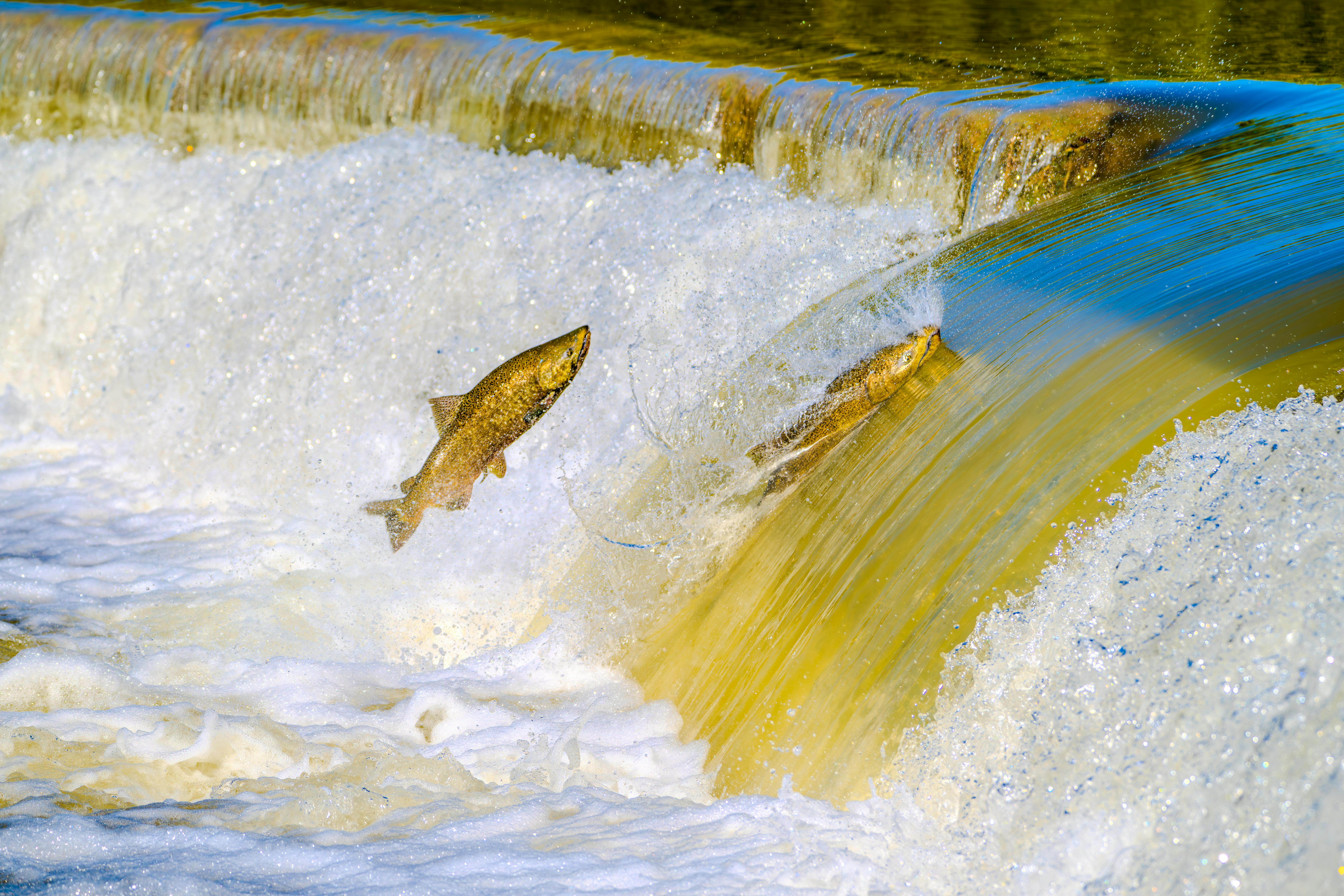
Few animals demonstrate more dramatic life cycle transitions than anadromous salmon, which hatch in freshwater streams, migrate to the ocean for growth, then return to their natal streams to spawn. This homing ability rivals the most sophisticated navigation systems, with salmon detecting their home stream’s unique chemical signature—an olfactory memory imprinted during their juvenile stage.
The spawning migration transforms salmon profoundly. They cease feeding entirely, relying on stored energy for their upstream journey against powerful currents and over waterfalls. Their bodies undergo remarkable physiological changes, from silver ocean coloration to brilliant spawning hues. After successfully reproducing, Pacific salmon die, their bodies providing essential nutrients that fertilize the streams and forests, completing a cycle that has sustained ecosystems for millennia.
🦆 Avian Migrations: Masters of the Skies
Birds demonstrate the most diverse migration strategies in the animal kingdom, with approximately 40% of all bird species undertaking regular seasonal movements. These range from short altitudinal migrations of a few hundred meters to intercontinental journeys crossing hemispheres.
Bar-tailed godwits hold the record for non-stop flight, traveling up to 7,500 miles from Alaska to New Zealand in a single continuous journey lasting over eight days. During this time, they fly without food, water, or rest, burning stored fat reserves with extraordinary efficiency. Their bodies undergo pre-migration transformations, with digestive organs shrinking to reduce weight while flight muscles and heart enlarge to support sustained aerobic activity.
Migratory birds utilize flyways—traditional routes concentrated along geographic features like coastlines, mountain ranges, and river valleys. These aerial highways connect breeding and wintering grounds through a network of critical stopover sites where birds refuel. The loss or degradation of even a single key stopover site can have cascading effects on entire populations, making flyway conservation essential for maintaining healthy migratory populations.
Nocturnal vs. Diurnal Migration Strategies
Many small songbirds migrate nocturnally, taking advantage of cooler temperatures that reduce water loss and predation risk. Night migration also allows them to feed during daylight hours at stopover sites, maximizing energy acquisition. These nocturnal travelers navigate using star patterns and magnetic cues, often calling to one another during flight to maintain flock cohesion.
Larger birds like raptors and storks prefer diurnal migration, exploiting thermal updrafts and ridge lift to soar with minimal energy expenditure. These birds spiral upward in thermals, then glide forward toward their destination, repeating the process throughout the day. This soaring strategy proves so energy-efficient that some large birds can migrate vast distances while barely flapping their wings.
🐘 Terrestrial Migrations: Following Ancient Pathways
Land-based migrations may lack the distances covered by some marine and avian species, but they’re no less impressive in scope and ecological significance. These movements often follow traditional routes used for generations, with knowledge passed from experienced individuals to younger animals through social learning.
The Serengeti wildebeest migration involves over 1.5 million animals moving in a circular pattern following seasonal rains and fresh grazing. This massive movement synchronizes with calving, with approximately 500,000 calves born within a three-week period. This birth pulse strategy overwhelms predators, ensuring higher survival rates despite intense predation pressure from lions, hyenas, and crocodiles.
Caribou undertake North America’s longest terrestrial migration, with some herds traveling over 3,000 miles annually between Arctic tundra calving grounds and boreal forest wintering areas. These migrations track the brief Arctic growing season, allowing caribou to exploit the protein-rich vegetation available during the short summer while avoiding deep snow accumulations in exposed tundra during winter.
🌡️ Climate Change: Disrupting Ancient Rhythms
Rapidly changing climate conditions pose unprecedented challenges to species relying on predictable environmental cues to time migrations and spawning events. Phenological mismatches—when animals arrive at destinations before or after optimal conditions—increasingly threaten population sustainability.
Earlier spring conditions at temperate and high latitudes mean that insect emergence and plant flowering now occur before some migratory birds arrive at breeding grounds. This temporal disconnect reduces food availability during the critical period when adults feed rapidly growing chicks. Species unable to advance their migration timing accordingly experience reduced reproductive success and declining populations.
Ocean warming affects marine migrations by shifting the distribution of prey species and altering current patterns that many animals use for navigation and energy-efficient travel. Coral spawning timing depends on precise temperature thresholds; as ocean temperatures become more variable and extreme, spawning may occur under suboptimal conditions, reducing fertilization success and larval survival.
🔬 Conservation Implications and Future Directions
Protecting migratory species requires international cooperation, as these animals cross political boundaries and depend on habitats in multiple countries. Conservation efforts must address threats throughout entire migration routes and life cycles, not just in isolated protected areas.
Satellite tracking technology has revolutionized our understanding of animal movements, revealing previously unknown migration routes and critical habitat areas. This information proves invaluable for identifying conservation priorities and assessing how human activities impact migratory populations. Geolocators, GPS tags, and biologgers now provide detailed movement data, activity patterns, and even physiological information from free-ranging animals.
Citizen science initiatives engage thousands of observers in documenting migration timing, abundance, and distribution patterns. These crowd-sourced datasets span continental scales and multi-decade timeframes, providing essential information for detecting population trends and phenological shifts. Such programs demonstrate how public engagement can contribute meaningfully to scientific understanding and conservation action.
🌿 Ecological Roles of Migrants: Connecting Ecosystems
Migratory animals serve as mobile links between ecosystems, transporting nutrients, energy, and even other organisms across vast distances. These ecological connections influence community structure, nutrient cycling, and ecosystem productivity in ways we’re only beginning to appreciate.
Salmon migrations represent massive nutrient subsidies from ocean to freshwater and terrestrial ecosystems. When bears, eagles, and other predators consume spawning salmon, they distribute marine-derived nutrients throughout watersheds. Nitrogen isotope studies reveal that trees growing near salmon streams derive significant portions of their nitrogen from salmon carcasses, demonstrating how marine resources fuel forest productivity far from the ocean.
Migratory birds transport seeds, propagules, and even aquatic invertebrates between wetlands, facilitating plant dispersal and maintaining genetic connectivity among isolated water bodies. Waterfowl moving between continents can carry viable seeds in their digestive systems or mud attached to their feet, potentially introducing species to new locations thousands of miles away.
🎯 Adapting to Change: Evolutionary Responses
While rapid environmental change challenges many species, evolution hasn’t stopped. Some populations show evidence of adapting migration timing and routes in response to contemporary conditions. These evolutionary adjustments offer hope that some species may track changing environments, though the pace of adaptation may not match the rate of environmental change for many populations.
Genetic studies reveal that migration timing has a heritable basis in many species, meaning natural selection can act on this trait. Populations experiencing strong selection pressure from climate-driven phenological mismatches may evolve earlier migration if sufficient genetic variation exists. However, this adaptation takes multiple generations and may proceed too slowly for species with long generation times.
Behavioral plasticity—the ability of individuals to adjust their behavior based on environmental conditions—provides another mechanism for coping with change. Species with flexible migration strategies may fare better than those with rigid, genetically programmed patterns. Understanding the balance between genetic determination and behavioral flexibility helps predict which species can successfully adapt to rapidly changing conditions.
The intricate tapestry of seasonal migrations and spawning cycles represents millions of years of evolutionary refinement, with each species’ timing precisely calibrated to its ecological niche. These patterns connect ecosystems across the globe, moving energy and nutrients while maintaining biodiversity and ecosystem function. As we face accelerating environmental change, understanding and protecting these natural rhythms becomes not just a scientific pursuit but an urgent conservation imperative. The survival of countless species—and the ecological services they provide—depends on our ability to maintain the conditions that allow these ancient patterns to persist into an uncertain future. 🌎