Anúncios
Coastal erosion threatens shorelines worldwide, but strategic vegetation planting offers a natural, sustainable solution to stabilize sand and protect beaches from the relentless forces of wind and waves.

🌊 Understanding the Science Behind Beach Vegetation and Sand Stabilization
Beach vegetation serves as nature’s engineering marvel, creating an intricate root system that binds sand particles together while simultaneously reducing wind velocity across dune surfaces. These specialized plants have evolved remarkable adaptations that allow them to thrive in harsh coastal environments characterized by salt spray, intense sunlight, nutrient-poor soils, and constant sand movement.
Anúncios
The relationship between vegetation and sand stabilization operates through multiple mechanisms. Plant roots penetrate deep into the substrate, creating a three-dimensional network that mechanically locks sand grains in place. Above ground, stems and leaves act as baffles that slow wind speed, causing airborne sand particles to drop and accumulate around the plant base. This positive feedback loop gradually builds dunes and protects inland areas from storm surge and flooding.
Research demonstrates that vegetated dunes can reduce wave energy by up to 60% compared to bare sand, while also capturing and storing carbon dioxide from the atmosphere. This dual benefit makes coastal vegetation an essential component of both erosion control and climate change mitigation strategies.
Anúncios
🏖️ Selecting the Right Species for Your Coastal Environment
Success in beach revegetation depends critically on choosing species adapted to your specific geographic location, climate zone, and exposure level. Native plants invariably perform best, having co-evolved with local conditions over millennia.
Primary Dune Stabilizers: The Frontline Defenders
For the harshest conditions closest to the water, pioneer species represent your first choice. American beachgrass (Ammophila breviligulata) dominates Atlantic and Great Lakes coasts, thriving in actively moving sand and tolerating frequent saltwater inundation. Its European cousin, European beachgrass (Ammophila arenaria), serves similar functions on Pacific shores, though it can become invasive in some regions.
Sea oats (Uniola paniculata) reign supreme along the Gulf Coast and southeastern Atlantic states, producing distinctive seed heads that add aesthetic value while stabilizing sand. This species enjoys legal protection in many states due to its ecological importance. Bitter panicum (Panicum amarum) often accompanies sea oats, offering excellent sand-binding capabilities with faster establishment rates.
On Pacific coastlines, American dunegrass (Leymus mollis) provides exceptional stabilization without the invasive tendencies of some introduced species. This native grass establishes quickly and tolerates harsh exposure while supporting native insect populations.
Secondary Species: Building Biodiversity and Resilience
Once pioneer species establish a foundational dune structure, secondary plants can colonize the more protected leeward slopes and backdune areas. These species contribute to ecosystem complexity while providing additional erosion control.
Beach plum (Prunus maritima) offers woody structure, edible fruit, and beautiful spring flowers. Its deep root system stabilizes sand while its dense branching pattern creates wildlife habitat. Bayberry (Morella pensylvanica) serves similar functions with the added benefit of nitrogen fixation that enriches surrounding soil.
Saltmeadow cordgrass (Spartina patens) excels in areas with occasional overwash, forming dense meadows that trap sediment and dampen wave energy. Beach evening primrose (Oenothera drummondii) provides low-growing groundcover with cheerful yellow blooms that stabilize sand while requiring minimal maintenance.
🔧 Preparation and Planning: Setting the Foundation for Success
Thorough preparation dramatically increases establishment success rates while reducing long-term maintenance requirements. Begin by assessing your site conditions, including sand grain size, exposure to wind and waves, existing vegetation patterns, and any regulatory requirements that may govern coastal planting activities.
Many jurisdictions require permits for dune manipulation or vegetation installation, particularly in areas designated as critical habitat or within setback zones. Contact your local coastal management authority early in the planning process to ensure compliance with all applicable regulations.
Timing Your Planting Window
Plant timing significantly impacts survival rates. In most temperate regions, fall planting (September through November) proves optimal, allowing roots to establish during cooler months before facing summer stress. Spring planting (March through May) represents a secondary window but requires more vigilant irrigation during the critical first summer.
Tropical and subtropical coastal areas offer more flexibility, though avoiding the hottest months and timing plantings to coincide with rainy seasons improves outcomes. Monitor long-range weather forecasts to avoid planting immediately before predicted storm events that could wash away newly installed vegetation.
Soil Amendments and Site Modifications
While beach plants tolerate nutrient-poor conditions, strategic amendments can boost establishment success. Organic matter such as compost or aged manure improves water retention in sandy soils without compromising drainage. Apply amendments sparingly, incorporating them into planting holes rather than broadcasting across the surface where wind may disperse them.
Some practitioners add slow-release fertilizers formulated for coastal applications, though excessive nutrients can stimulate unwanted weedy growth or cause environmental problems if washed into coastal waters. When in doubt, rely on organic matter rather than synthetic fertilizers.
🌱 Planting Techniques That Maximize Establishment Success
Proper installation techniques significantly influence whether your coastal planting thrives or struggles. Attention to detail during the planting process pays dividends through improved survival rates and faster dune development.
Preparing Plant Material
Containerized plugs and bare-root divisions represent the most common planting stock for coastal vegetation. Containerized material establishes more reliably but costs more, while bare-root stock offers economy for large-scale projects if properly handled. Regardless of source, keep roots moist and protected from sun and wind until the moment of installation.
Soak bare-root material in water for several hours before planting, allowing tissues to fully hydrate. Trim any damaged or excessively long roots, making clean cuts with sharp pruners. For containerized plants, gently tease apart circling roots that may have formed in the container to encourage outward growth.
Installation Methods
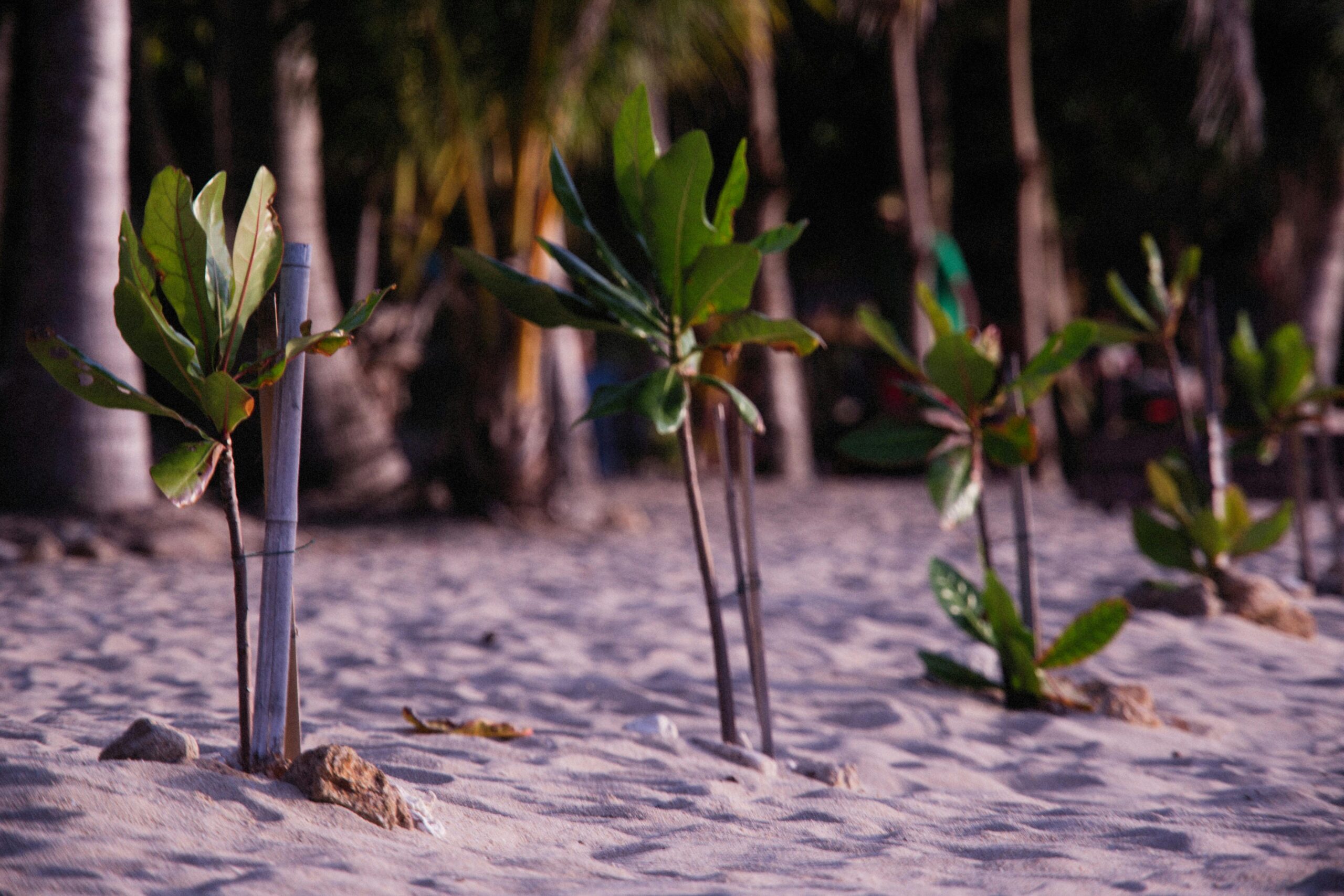
Dig planting holes slightly larger than the root mass, creating a depression that will capture and hold water. Position plants at the same depth they grew previously, avoiding burying stems too deeply or exposing roots. Firm sand around roots to eliminate air pockets while avoiding excessive compaction.
Water immediately after planting, applying enough moisture to saturate the root zone. This initial watering settles sand around roots and provides critical hydration. For large projects, consider using a water trailer or truck-mounted tank to ensure adequate irrigation capacity.
Spacing depends on species, project goals, and budget constraints. Typical spacing ranges from 18 to 36 inches on center, with tighter spacing producing faster coverage but requiring more plants. Staggered or triangular patterns cover ground more efficiently than grid layouts.
💧 Irrigation Strategies for Coastal Plantings
Water availability often determines the success or failure of beach vegetation projects. Sandy soils drain rapidly, while salt spray and wind increase plant water demands. Developing a realistic irrigation plan before planting prevents costly losses.
Newly installed vegetation requires consistent moisture for the first 8 to 12 weeks until roots penetrate deeply enough to access stable moisture reserves. During this establishment period, water two to three times weekly if natural rainfall proves insufficient, applying approximately one inch of water per irrigation event.
As plants establish, gradually reduce irrigation frequency while maintaining adequate volume per application. This encourages deep rooting rather than shallow, drought-sensitive root systems. Most beach vegetation becomes relatively drought-tolerant once established, though supplemental water during extended dry periods improves performance.
Where permanent irrigation infrastructure isn’t feasible, consider using water-storing crystals or gels mixed into planting holes, or install temporary drip irrigation supplied by a water truck. Some projects successfully employ recycled greywater or captured rainwater, though salt content must be monitored to prevent buildup.
🛡️ Protection Measures and Maintenance Requirements
Young plantings face numerous threats during the vulnerable establishment phase. Proactive protection measures significantly improve survival rates while reducing replanting costs.
Physical Barriers and Fencing
Sand fencing serves dual purposes: protecting young plants from trampling and burial while simultaneously trapping windblown sand to accelerate dune building. Install parallel rows of fence upwind of plantings, using wooden slat fencing or geotextile materials designed for sand capture. Fence height typically ranges from 36 to 48 inches.
Position fencing to allow approximately 50% porosity—dense enough to slow wind but permeable enough to prevent scouring. As sand accumulates, fence may become buried, requiring additional sections added on top to maintain effectiveness. Some designs incorporate removable posts that can be raised as dunes build.
Restrict foot traffic through planted areas using post-and-rope barriers or educational signage explaining the ecological importance of dune vegetation. Create clearly marked access paths with stabilized surfaces to channel human activity away from restoration zones.
Ongoing Maintenance Activities
Monitor plantings regularly during the first year, noting survival rates, growth patterns, and any emerging problems. Replace failed plants promptly, particularly during the initial establishment period when gaps can expand rapidly. Document successes and challenges to inform future project phases.
Weed control proves essential in some situations, though distinguishing desirable native colonizers from problematic invasive species requires botanical knowledge. Remove aggressive invasives like Asiatic sand sedge or Australian pine immediately, while generally allowing native volunteers to establish.
Storm debris removal may be necessary after major weather events, though avoid excessive disturbance that could damage plant roots or destabilize accumulated sand. Some debris, particularly woody material, may actually benefit dune building if positioned strategically.
📊 Measuring Success and Long-Term Monitoring
Establishing clear metrics for evaluating project performance allows adaptive management and demonstrates the value of restoration investments to stakeholders and funding agencies.
| Metric | Measurement Method | Target Threshold |
|---|---|---|
| Plant Survival Rate | Count living vs. installed plants | 70-80% after first year |
| Vegetation Coverage | Visual estimation or photo analysis | 60% coverage within 2-3 years |
| Dune Volume Change | Surveying or elevation measurements | Positive accretion annually |
| Species Diversity | Count of species per unit area | 5+ species in mature systems |
Photographic documentation provides powerful evidence of change over time. Establish permanent photo points with consistent framing and lighting conditions, capturing images at regular intervals throughout the project timeline. Ground-level and elevated perspectives offer complementary views of vegetation development and dune evolution.
Topographic surveys using GPS equipment or drone-based photogrammetry quantify sand accumulation and dune profile changes. Comparing surveys across seasons and years reveals whether vegetation successfully captures and retains sediment or if erosion continues despite planting efforts.
🌍 Community Engagement and Volunteer Involvement
Successful coastal restoration extends beyond technical considerations to encompass social dimensions. Engaging local communities creates stewardship relationships that enhance long-term project sustainability while building public understanding of coastal processes.
Volunteer planting events generate enthusiasm and hands-on education opportunities. Organize events during optimal planting windows, providing clear instruction and supervision to ensure proper technique. Participants develop personal connections to restored areas, becoming advocates and informal monitors who report problems and discourage destructive behaviors.
Educational programming targeting schools, civic organizations, and tourists raises awareness about the ecological importance of beach vegetation. Interpretive signage explaining restoration goals and requesting visitor cooperation improves compliance with access restrictions while fostering appreciation for coastal ecosystems.
Collaborate with local governments, conservation organizations, and business communities to build coalitions supporting coastal protection. Multi-stakeholder partnerships leverage diverse resources and expertise while distributing responsibilities across multiple entities.
🌿 Advanced Techniques for Challenging Situations
Some coastal environments present extreme challenges requiring specialized approaches beyond standard planting protocols. Innovative techniques adapted to local conditions can overcome obstacles that would defeat conventional methods.
Tackling Severe Erosion Zones
In areas experiencing active erosion, vegetation alone may prove insufficient without structural interventions to halt sand loss. Biodegradable coir logs, brush mattresses, or reef structures can provide immediate erosion control while vegetation establishes. These materials eventually decompose, leaving living plants as permanent protection.
Living shorelines combining vegetation with oyster reefs, mussel beds, or submerged aquatic vegetation create layered defense systems that dissipate wave energy across multiple zones. This integrated approach proves more resilient than either vegetation or hardened structures alone.
Addressing Contaminated or Disturbed Sites
Former development sites or areas with contaminated fill require assessment before planting. Test for pollutants, buried debris, or compacted layers that may inhibit root penetration. Remediation strategies might include contaminant removal, breaking up compacted zones, or applying clean sand cap layers before vegetation installation.
Some beach plants demonstrate surprising tolerance for disturbed conditions, making them valuable pioneer species for challenging sites. Once these hardy colonizers improve site conditions, more sensitive species can follow in succession.
🏆 Celebrating Natural Coastal Resilience Through Vegetation
Establishing beach vegetation for sand stabilization and coastal protection represents an investment in natural resilience that pays dividends for generations. Unlike hardened structures that degrade and require replacement, living systems grow stronger over time, adapting to changing conditions while supporting diverse ecological communities.
The process demands patience, as dune-building occurs gradually through countless small interactions between plants, wind, and sand. Early results may appear modest, but persistence yields transformed coastlines where barren, eroding beaches evolve into vegetated dune systems teeming with life.
Your efforts contribute to a global movement recognizing that working with natural processes rather than against them creates more sustainable, cost-effective coastal protection. Each plant installed represents hope for a future where thriving beaches and dunes shield communities from storms while providing habitat, recreation, and beauty for all to enjoy. The journey from bare sand to stabilized, vegetated coastline may be long, but the rewards—ecological, economic, and aesthetic—make every effort worthwhile.