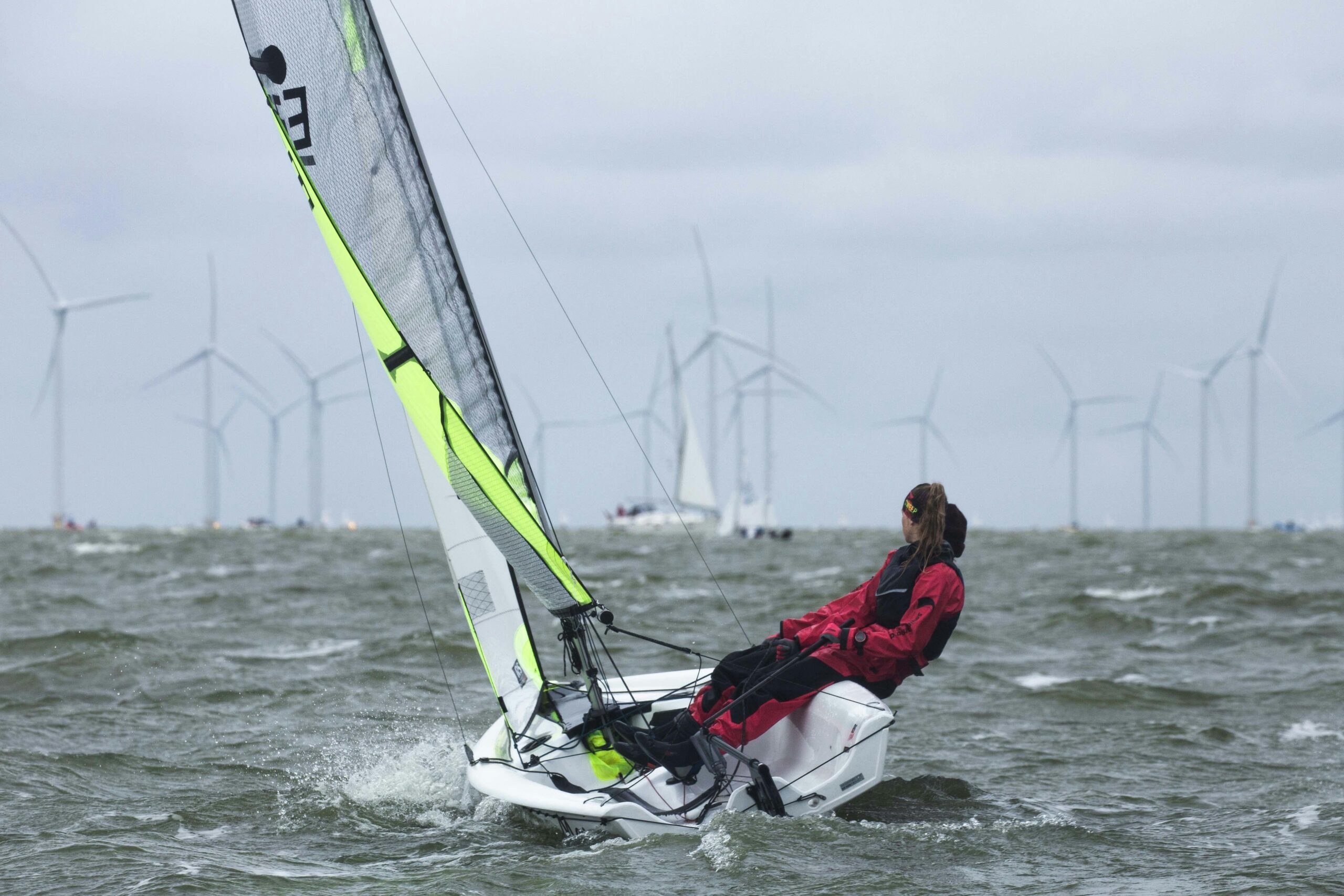
Our oceans face unprecedented challenges as climate change, overfishing, and pollution threaten marine ecosystems worldwide, demanding innovative approaches to preserve these vital resources for generations to come.

🌊 The Critical State of Marine Resources Today
The world’s oceans cover more than 70% of Earth’s surface and provide livelihoods for billions of people. Yet, we stand at a crossroads where traditional management approaches no longer suffice to protect marine biodiversity and ensure sustainable fisheries. According to recent scientific assessments, approximately one-third of global fish stocks are overexploited, while another 60% are fished at maximum sustainable levels, leaving little room for error.
Marine ecosystems provide essential services beyond food production, including climate regulation, oxygen production, and carbon sequestration. The economic value of ocean-based industries exceeds $2.5 trillion annually, supporting coastal communities and global food security. However, the increasing pressure from human activities demands smarter, more sophisticated approaches to resource management.
Traditional conservation methods, while valuable, often rely on historical data and reactive measures. The dynamic nature of marine environments, influenced by changing ocean temperatures, acidification, and shifting species distributions, requires predictive tools that can anticipate challenges before they become crises. This is where innovative modeling approaches become indispensable.
Revolutionary Modeling Approaches Transforming Marine Conservation
Advanced computational modeling has emerged as a game-changer in marine resource management. These sophisticated systems integrate multiple data streams, from satellite imagery and oceanographic sensors to fishing vessel tracking and biological surveys, creating comprehensive digital representations of marine ecosystems.
Ecosystem-Based Management Models
Unlike single-species approaches of the past, ecosystem-based models consider the complex interactions between different marine organisms, their habitats, and environmental factors. These integrated models account for predator-prey relationships, habitat dependencies, and cascading effects throughout the food web. By simulating various management scenarios, scientists can predict outcomes before implementing policies in real-world settings.
One particularly successful application involves the Baltic Sea, where multi-species models helped rebuild cod stocks while managing herring and sprat populations. The modeling approach revealed that reducing fishing pressure on all three species simultaneously produced better long-term outcomes than focusing on cod alone, demonstrating the importance of holistic ecosystem thinking.
Machine Learning and Artificial Intelligence Applications
Artificial intelligence has revolutionized our ability to process vast amounts of marine data. Machine learning algorithms can identify patterns in oceanographic conditions, predict fish migration routes, and detect illegal fishing activities with remarkable accuracy. These systems continuously improve as they process more information, becoming increasingly precise over time.
Neural networks trained on decades of catch data, environmental measurements, and biological observations can forecast population dynamics with unprecedented accuracy. This predictive capability enables proactive management decisions, allowing authorities to adjust fishing quotas, establish temporary closures, or redirect fishing effort before stocks become depleted.
🔬 Integrating Climate Change into Marine Resource Planning
Climate change represents perhaps the greatest challenge to long-term marine resource preservation. Rising ocean temperatures, changing currents, and shifting pH levels are fundamentally altering where fish live, how they reproduce, and when they migrate. Effective modeling must incorporate these dynamic environmental factors to remain relevant.
Climate-integrated models project how species distributions will shift over coming decades, enabling managers to anticipate changes and adapt regulations accordingly. For instance, models predict that many commercially important fish species will migrate poleward as waters warm, creating new opportunities in some regions while depleting resources in others. Understanding these transitions helps coastal communities prepare for economic and ecological shifts.
Ocean acidification models are particularly crucial for shellfish industries and coral reef ecosystems. By projecting calcification rates under different carbon emission scenarios, these tools help identify vulnerable areas and species that require priority protection. Some models now incorporate potential adaptation strategies, such as selective breeding programs or assisted migration initiatives.
Coupling Physical and Biological Models
The most sophisticated modeling approaches couple physical oceanographic models with biological population dynamics. These integrated systems simulate how currents, temperature gradients, and nutrient availability influence larval dispersal, growth rates, and survival probabilities. Understanding these connections is essential for designing effective marine protected areas and managing transboundary fish stocks.
Regional ocean models with nested grids can zoom from basin-scale circulation patterns down to local coastal processes, capturing the full range of environmental influences on marine life. When combined with individual-based models that track virtual fish through their life cycles, researchers gain unprecedented insights into population connectivity and recruitment dynamics.
🎯 Data-Driven Decision Making for Sustainable Fisheries
The foundation of effective modeling rests on robust data collection and management systems. Modern fisheries increasingly embrace electronic monitoring, GPS tracking, and automated reporting that provide near-real-time information on fishing activities. This data revolution enables adaptive management strategies that respond quickly to emerging trends.
Participatory modeling approaches involve fishermen, scientists, and managers collaboratively developing and refining models. This inclusion brings valuable traditional ecological knowledge into formal assessment frameworks while building trust and compliance among stakeholder groups. When fishermen understand and contribute to the models informing management decisions, they’re more likely to support resulting regulations.
Uncertainty Quantification and Risk Assessment
All models contain uncertainties, and communicating these limitations honestly is crucial for responsible decision-making. Modern approaches explicitly quantify uncertainty using Bayesian statistics, ensemble modeling, and Monte Carlo simulations. Rather than presenting single predictions, these methods generate probability distributions showing ranges of possible outcomes.
Management strategy evaluation frameworks test different policy options against thousands of simulated futures, revealing which approaches perform well across diverse scenarios. This risk-based perspective helps managers balance conservation objectives with economic considerations, choosing strategies that maintain sustainability even under unfavorable conditions.
Marine Protected Areas: Modeling Optimal Networks
Marine protected areas (MPAs) serve as cornerstone conservation tools, providing refuges where marine life can reproduce and rebuild populations. However, designing effective MPA networks requires sophisticated spatial modeling to ensure adequate coverage of critical habitats, representation of biodiversity, and connectivity between protected sites.
Optimization algorithms evaluate millions of possible MPA configurations to identify networks that maximize conservation benefits while minimizing impacts on fishing communities. These models consider factors including species distributions, habitat types, oceanographic connectivity, enforcement capacity, and socioeconomic dependencies.
Evidence from well-designed MPA networks demonstrates significant spillover benefits, with protected populations producing larvae and adults that replenish adjacent fishing grounds. Models quantify these spillover effects, helping demonstrate to skeptical stakeholders that short-term fishing restrictions generate long-term benefits for both conservation and fisheries productivity.
Dynamic Ocean Management Strategies
Traditional static MPAs may become less effective as climate change shifts species distributions. Dynamic ocean management represents an innovative alternative, using real-time data and predictive models to adjust protection measures based on current conditions. Temporary closures can follow vulnerable populations or protect aggregations during critical life stages.
Mobile applications and web platforms now deliver dynamic management information directly to fishing vessels, showing areas to avoid based on the latest bycatch risk predictions or endangered species sightings. This technology-enabled approach allows more flexible, targeted protection that adapts to changing ocean conditions.
🌐 Global Cooperation and Transboundary Resource Management
Many marine species migrate across international boundaries, making conservation inherently a global challenge. Highly migratory species like tuna, sharks, and sea turtles require coordinated management across vast ocean regions. Modeling provides a common scientific foundation for international negotiations and treaty development.
Regional fisheries management organizations increasingly rely on sophisticated stock assessment models to set catch limits for shared resources. Harmonizing modeling approaches across countries builds trust and ensures consistent standards, though achieving consensus remains politically challenging when national interests diverge.
Building Capacity in Developing Nations
Many biodiversity-rich coastal nations lack resources to implement advanced modeling systems. International partnerships and capacity-building initiatives transfer knowledge, technology, and training to regions where they’re most needed. Open-source modeling platforms democratize access to sophisticated tools, enabling smaller nations to participate in evidence-based management.
Successful capacity development goes beyond technical training, addressing institutional frameworks, data infrastructure, and governance systems necessary to translate model outputs into effective policy. When local scientists lead modeling efforts, results better reflect regional conditions and priorities, increasing relevance and adoption.
Economic Modeling for Prosperous Ocean Economies
Sustainable ocean management must balance ecological preservation with economic prosperity for coastal communities. Bio-economic models integrate population dynamics with market conditions, fishing costs, and social factors to evaluate trade-offs between different management strategies. These analyses reveal that short-term economic sacrifices often generate substantial long-term gains.
Studies consistently demonstrate that rebuilding depleted fish stocks increases fishery profitability, employment, and food security over time. Models quantify these benefits, providing compelling economic arguments for conservation measures. When stakeholders understand the financial logic of sustainability, political support for necessary reforms strengthens.
Valuing Ecosystem Services Beyond Fisheries
Comprehensive ocean valuation models account for ecosystem services including carbon storage, coastal protection, tourism, and cultural significance. By monetizing these often-overlooked benefits, models reveal the true economic value of healthy marine ecosystems, which far exceeds extractive fishing value alone.
Blue carbon initiatives use models to quantify carbon sequestration by mangroves, seagrasses, and salt marshes, enabling these ecosystems to generate carbon credits that fund conservation. Such innovative financing mechanisms create economic incentives aligned with environmental objectives, demonstrating how modeling can bridge conservation and development goals.
🚀 Emerging Technologies Shaping Future Marine Management
Rapid technological advancement continues expanding modeling capabilities. Autonomous underwater vehicles equipped with sophisticated sensors collect high-resolution data from previously inaccessible ocean regions. Environmental DNA sampling detects species presence without physical capture, dramatically improving biodiversity monitoring efficiency.
Satellite remote sensing technologies now measure ocean color, sea surface temperature, and even detect individual fishing vessels in near-real-time. Integrating these diverse data streams into modeling frameworks creates comprehensive situational awareness for marine resource management. The challenge shifts from data scarcity to developing analytical tools that extract actionable insights from overwhelming information volumes.
Digital Twins of Marine Ecosystems
The concept of digital twins—virtual replicas of physical systems continuously updated with real-world data—is being applied to entire ocean basins. These dynamic models simulate ecosystem responses to various pressures and management interventions, serving as testing grounds for policy experiments too risky or expensive to conduct in reality.
As computational power increases and models become more sophisticated, digital ocean twins will enable unprecedented forecasting capabilities. Managers could explore “what-if” scenarios, comparing outcomes of different regulatory frameworks before implementation. This capability transforms marine management from reactive to proactive, preventing problems rather than responding to crises.
Engaging Communities Through Accessible Modeling Interfaces
Complex models lose effectiveness if results remain trapped in academic journals or technical reports. User-friendly visualization tools and interactive platforms make modeling outputs accessible to diverse audiences including policymakers, fishermen, and the general public. When people understand the science behind management decisions, support for conservation measures increases.
Gamification strategies teach ocean sustainability principles through interactive simulations where users manage virtual fisheries, experiencing firsthand how overfishing depletes stocks while sustainable practices maintain long-term productivity. Educational applications built on simplified models inspire the next generation of ocean stewards while building public ocean literacy.

🌟 Charting the Course Toward Ocean Abundance
The integration of innovative modeling approaches into marine resource management represents a fundamental shift toward evidence-based, adaptive conservation. While challenges remain—including data gaps, model uncertainties, and political barriers—the trajectory is encouraging. Numerous success stories demonstrate that when science informs policy and stakeholders embrace sustainable practices, depleted marine populations can recover remarkably quickly.
The coming decades will determine whether humanity rises to the challenge of ocean stewardship. Climate change, population growth, and increasing resource demands will intensify pressures on marine ecosystems. However, the modeling tools and management frameworks now being developed provide realistic pathways toward sustainable ocean use that maintains biodiversity, supports livelihoods, and preserves marine resources for future generations.
Success requires sustained investment in marine science, continued technological innovation, and political will to implement evidence-based policies even when they demand short-term sacrifices. International cooperation must strengthen, ensuring that modeling approaches and conservation strategies extend across jurisdictional boundaries matching the scale of marine ecosystems themselves.
Most importantly, ocean conservation must recognize the human dimension—the millions of people whose food security, cultural identity, and economic wellbeing depend on marine resources. Inclusive modeling approaches that incorporate traditional knowledge, address social equity, and support just transitions for affected communities will prove most sustainable in the long run.
Our oceans possess remarkable resilience when given opportunity to recover. With innovative modeling guiding informed management decisions, sustainable fishing practices becoming industry standards, and growing public commitment to ocean conservation, the vision of abundant, thriving marine ecosystems supporting prosperous coastal communities remains achievable. The models show us the path forward; collective action will determine whether we take it.