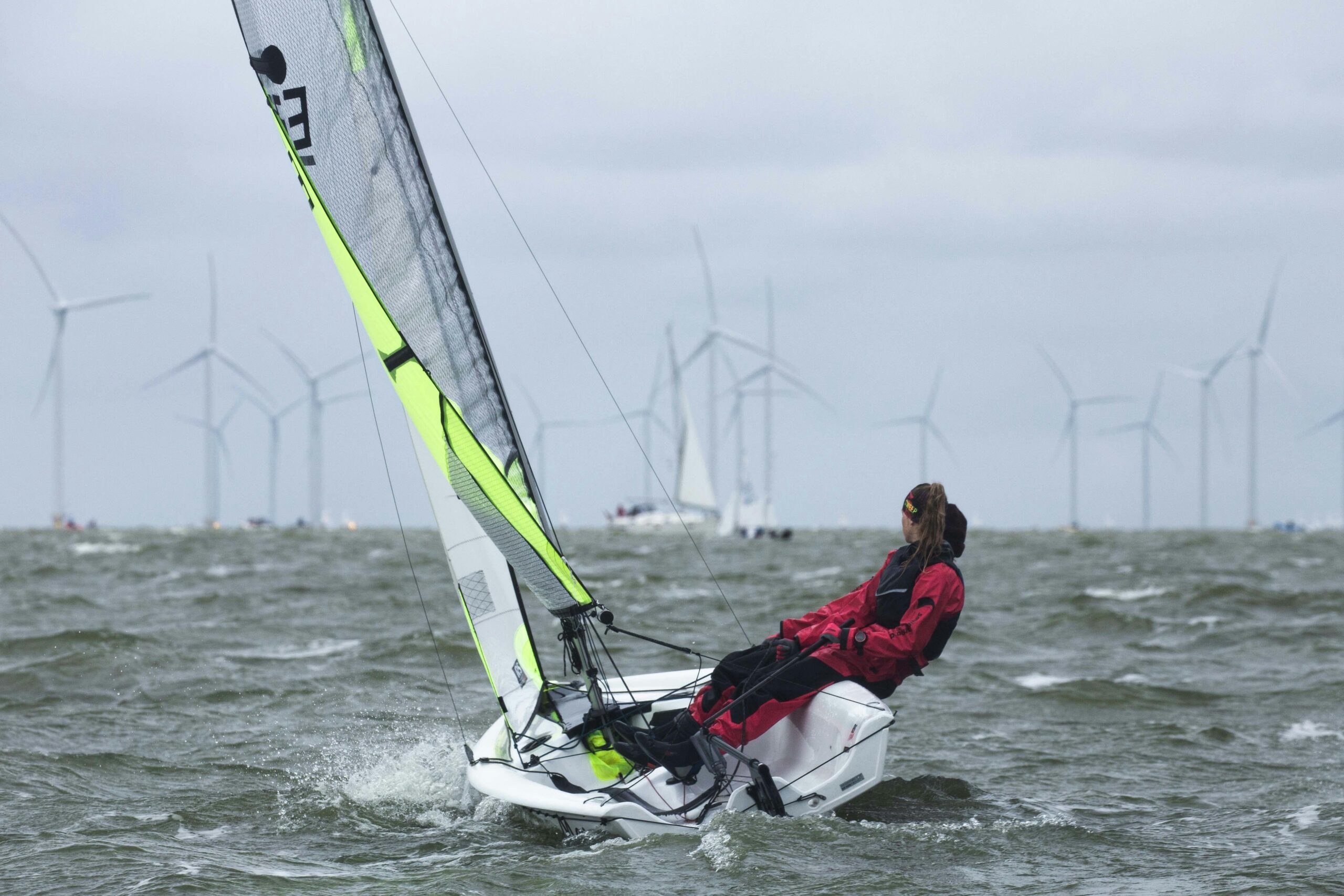
Marine modeling faces a fundamental challenge: the ocean is vast, dynamic, and filled with unknowns that can compromise even the most sophisticated predictions.

🌊 The Hidden Complexity Beneath the Surface
Every maritime operation, from coastal engineering to climate forecasting, relies on models that attempt to replicate ocean behavior. Yet these models operate in an environment characterized by inherent unpredictability. Water temperature fluctuations, shifting currents, biological interactions, and atmospheric influences create a web of variables that defy simple calculation.
Understanding uncertainty isn’t about admitting defeat—it’s about building smarter systems. When we acknowledge what we don’t know, we create models that remain reliable even when confronted with unexpected conditions. This approach transforms uncertainty from a liability into a manageable component of marine science.
The difference between a model that works in ideal conditions and one that performs reliably in real-world scenarios lies in how thoroughly uncertainty has been identified, quantified, and incorporated into its framework. This distinction separates theoretical exercises from practical tools that guide critical decisions.
Identifying Sources of Uncertainty in Marine Environments
Before managing uncertainty, we must recognize where it originates. Marine modeling uncertainty stems from multiple interconnected sources, each contributing different challenges to prediction accuracy.
📊 Parameter Uncertainty and Measurement Limitations
Physical parameters like wave height, salinity gradients, and sediment composition are never known with perfect precision. Measurement instruments have inherent limitations, and sampling can only capture snapshots of continuously changing conditions. Even with advanced sensor networks, gaps in spatial and temporal coverage introduce uncertainty that propagates through model calculations.
Bathymetric data, essential for hydrodynamic modeling, often contains errors from surveying methods or changes in seabed topography over time. These small inaccuracies compound when models simulate complex interactions between water movement and underwater terrain.
🔄 Structural Uncertainty in Model Formulation
Every model simplifies reality through mathematical equations and assumptions. These simplifications introduce structural uncertainty—the gap between how the model represents processes and how they actually occur in nature. Turbulence parameterization, boundary condition specification, and process interaction assumptions all inject uncertainty into predictions.
Choosing between different modeling approaches creates additional uncertainty. Should you use a spectral wave model or a phase-resolving model? Each has strengths and weaknesses that affect reliability under different conditions.
🌐 Scenario Uncertainty and Future Conditions
Models often project future states based on assumed scenarios—climate trajectories, land-use changes, or human interventions. These scenarios themselves carry uncertainty, particularly when modeling long-term phenomena like sea-level rise or coastal evolution decades into the future.
The further into the future a model projects, the wider the uncertainty envelope becomes. This isn’t a flaw but a fundamental characteristic of complex systems with multiple possible evolutionary pathways.
Quantification Methods That Actually Work
Identifying uncertainty is only the first step. Effective management requires quantification—assigning numerical values or probability distributions to uncertain elements so their impact on predictions can be assessed systematically.
Monte Carlo Simulation for Comprehensive Sensitivity Analysis
Monte Carlo methods involve running models thousands of times with parameters randomly sampled from their uncertainty distributions. This brute-force approach generates output distributions that reveal how uncertainty propagates through the system and which inputs most strongly influence results.
While computationally intensive, Monte Carlo simulation provides comprehensive insight into model behavior across the full range of possible input combinations. Modern computing power has made this approach increasingly practical even for complex three-dimensional ocean models.
Ensemble Modeling for Robust Predictions
Rather than relying on a single model configuration, ensemble approaches run multiple versions with varied parameters, initial conditions, or structural formulations. The spread among ensemble members quantifies prediction uncertainty while the ensemble mean often provides more accurate forecasts than any individual realization.
Operational weather forecasting has demonstrated ensemble modeling’s power. Marine applications are increasingly adopting similar strategies, running suites of wave, circulation, and ecosystem models to generate probabilistic forecasts that communicate uncertainty alongside predicted conditions.
Bayesian Approaches for Learning from Data
Bayesian methods combine prior knowledge about parameters with observational data to generate updated probability distributions. This framework naturally accommodates uncertainty and provides a mathematically rigorous way to reduce it as new information becomes available.
When ship-based measurements, satellite observations, or in-situ sensors collect data, Bayesian updating refines model parameters and reduces uncertainty. This creates models that improve continuously as monitoring systems gather more information about the marine environment.
⚙️ Practical Implementation Strategies
Theoretical approaches to uncertainty quantification require practical implementation strategies that balance rigor with computational feasibility and operational constraints.
Hierarchical Modeling for Computational Efficiency
Complex marine models often require hours or days to complete single simulations. Running thousands of iterations for comprehensive uncertainty analysis becomes prohibitively expensive. Hierarchical approaches address this by combining high-fidelity models for critical simulations with computationally efficient surrogate models for broader parameter space exploration.
Machine learning techniques increasingly serve as surrogate models, trained on limited high-fidelity runs then used to rapidly approximate model behavior across wide parameter ranges. This hybrid approach maintains accuracy where it matters most while enabling thorough uncertainty quantification.
Targeted Observation Strategies
Not all uncertainties equally affect model reliability. Sensitivity analysis identifies which parameters most strongly influence predictions. This information guides data collection efforts, focusing limited resources on measurements that maximally reduce uncertainty in model outputs that matter for decision-making.
Adaptive sampling strategies deploy sensors or conduct surveys specifically to constrain the most influential uncertain parameters. This targeted approach accelerates uncertainty reduction compared to generic monitoring programs.
Communicating Uncertainty to Stakeholders
Technical uncertainty quantification loses value if results aren’t effectively communicated to decision-makers. Visualization techniques that clearly convey prediction confidence—through shaded uncertainty bands, probability maps, or risk matrices—help stakeholders understand both what models predict and how much confidence those predictions warrant.
Transparent uncertainty communication builds trust. Stakeholders appreciate honest assessments of prediction reliability, which ultimately strengthens the role of modeling in decision processes.
🎯 Domain-Specific Applications and Challenges
Different marine modeling applications face distinct uncertainty challenges requiring tailored management approaches.
Coastal Engineering and Infrastructure Design
Designing coastal structures demands predictions of extreme wave conditions, storm surge, and long-term morphological change. Uncertainty in these predictions directly impacts infrastructure safety and project costs. Conservative designs that account for uncertainty increase construction costs but reduce failure risk.
Probabilistic design approaches quantify risk explicitly, allowing engineers and stakeholders to make informed decisions about acceptable risk levels versus investment requirements. This framework acknowledges uncertainty while enabling rational decision-making despite incomplete knowledge.
Marine Ecosystem Management
Ecosystem models simulate complex biological interactions with substantial inherent uncertainty. Species behavior, population dynamics, and food web interactions involve numerous poorly-constrained parameters. Additionally, ecosystem responses to changing environmental conditions often exhibit nonlinear dynamics that amplify prediction uncertainty.
Management strategies increasingly adopt adaptive frameworks that acknowledge uncertainty. Rather than optimizing for a single predicted future, adaptive management implements flexible policies that can adjust as monitoring reveals how ecosystems actually respond to interventions.
Maritime Operations and Navigation
Weather routing, harbor operations, and offshore activities rely on short-term oceanographic forecasts. These applications balance uncertainty against operational constraints—ships need routes, construction windows require planning, and emergency responses demand immediate decisions despite uncertain conditions.
Probabilistic forecasts that quantify prediction confidence enable operators to assess risk and make informed decisions. A route that’s optimal under expected conditions might be unacceptably risky when uncertainty is considered, prompting alternative strategies with better worst-case performance.
Emerging Technologies Transforming Uncertainty Management
Technological advances are revolutionizing how marine scientists and engineers address modeling uncertainty.
📡 Satellite Remote Sensing and Data Assimilation
Satellite observations provide synoptic views of ocean surface conditions—temperature, wave height, currents, and biological productivity. Data assimilation techniques systematically incorporate these observations into models, constraining uncertain parameters and correcting prediction errors in real-time.
As satellite constellations expand and sensor resolution improves, the volume of available observational data grows exponentially. Advanced assimilation algorithms leverage this information to continuously reduce model uncertainty.
Autonomous Platforms for Persistent Monitoring
Gliders, autonomous surface vehicles, and profiling floats collect high-resolution measurements throughout the water column with minimal human intervention. These platforms fill observational gaps that satellites and fixed moorings cannot address, providing subsurface data crucial for validating and constraining three-dimensional circulation models.
Persistent monitoring from autonomous platforms enables near-real-time model validation and parameter refinement, continuously improving prediction reliability.
Artificial Intelligence for Pattern Recognition
Machine learning algorithms excel at identifying complex patterns in large datasets. Applied to marine modeling, AI techniques detect relationships between observational data and model parameters, accelerate surrogate model development, and even identify structural model deficiencies by recognizing systematic discrepancies between predictions and observations.
Deep learning approaches increasingly complement traditional physics-based models, either as data-driven components within hybrid frameworks or as independent predictive tools whose uncertainty characteristics differ from conventional models.
🔬 Case Studies in Successful Uncertainty Management
Real-world applications demonstrate how systematic uncertainty management improves marine modeling reliability.
Hurricane Storm Surge Forecasting
Probabilistic storm surge forecasts combine ensemble hurricane track predictions with surge models that account for uncertainty in storm parameters, bathymetry, and model structure. These forecasts communicate both expected surge heights and their associated uncertainty, enabling emergency managers to make evacuation decisions with clear understanding of prediction confidence.
Post-event validation has shown that probabilistic approaches provide more reliable guidance than deterministic predictions, particularly for extreme events where model uncertainty is greatest.
Offshore Wind Farm Siting and Design
Offshore wind development requires predictions of wave loads, foundation scour, and long-term site conditions. Uncertainty in these predictions affects both capital costs and operational risk. Projects increasingly employ comprehensive uncertainty quantification that propagates environmental uncertainties through engineering calculations to generate probabilistic design loads.
This approach enables risk-informed decision-making that optimizes the balance between construction costs and structural reliability over the project lifetime.
Marine Protected Area Design
Designing marine reserves to protect critical habitats requires models of larval dispersal, species distributions, and ecosystem connectivity. These models contain substantial uncertainty regarding biological processes and how organisms respond to environmental conditions.
Conservation planning that explicitly addresses this uncertainty generates reserve networks robust to model prediction errors. Rather than optimizing for a single predicted scenario, robust designs perform acceptably across the range of plausible model outcomes.
Building a Culture of Uncertainty Awareness
Technical methods alone cannot ensure effective uncertainty management. Success requires organizational culture that values honest uncertainty assessment over false precision.
Training and Capacity Building
Marine scientists and engineers need training in uncertainty quantification methods, probability theory, and statistical analysis. Professional development programs that build these skills create workforces capable of implementing sophisticated uncertainty management approaches.
Cross-disciplinary collaboration brings together domain experts who understand marine processes, statisticians who specialize in uncertainty quantification, and computer scientists who develop computational tools. This integration accelerates methodological advances and practical implementation.
Institutional Standards and Best Practices
Professional organizations and regulatory agencies increasingly establish standards requiring explicit uncertainty assessment in marine modeling studies. These standards ensure minimum quality levels while encouraging innovation in uncertainty management methods.
Documented best practices provide guidance for practitioners, helping them apply appropriate methods to their specific applications while avoiding common pitfalls in uncertainty analysis.
🚀 The Path Forward: Uncertainty as Opportunity
The future of marine modeling lies not in eliminating uncertainty—an impossible goal—but in managing it more effectively. Models that explicitly quantify and communicate uncertainty earn greater trust from stakeholders and provide more reliable guidance for decision-making.
Research frontiers include developing computationally efficient methods for high-dimensional uncertainty quantification, improving understanding of structural model uncertainty, and creating visualization techniques that effectively communicate complex probabilistic information.
As climate change intensifies, marine environments face conditions without historical precedent. Models must project into uncertain futures where past observations provide limited guidance. Robust uncertainty management becomes not just desirable but essential for navigating these unknown waters.
The most reliable marine models aren’t those claiming perfect predictions but those honestly assessing and clearly communicating what they know, what they don’t know, and how uncertainty affects their forecasts. This transparency transforms modeling from a source of potentially misleading precision into a tool for informed decision-making despite incomplete knowledge.
By mastering uncertainty management, the marine modeling community builds tools that remain reliable even when confronting the unexpected—models that help humanity navigate safely through the unknown waters ahead.