Coastal communities worldwide face unprecedented threats from rising sea levels, intensifying storms, and erosion. Swift, effective solutions are essential to protect these vulnerable areas and their inhabitants.

🌊 The Urgent Need for Coastal Protection Innovation
Climate change has accelerated the deterioration of shorelines at an alarming rate. Traditional coastal defense methods, while proven, often require years of planning, substantial funding, and lengthy construction periods. Communities don’t have the luxury of time when facing immediate threats from storm surges, flooding, and land loss.
Rapid-deployment tools represent a paradigm shift in coastal resilience strategies. These innovative solutions bridge the gap between emergency response and permanent infrastructure, offering protection when communities need it most. From modular barriers to nature-based interventions, these technologies are revolutionizing how we defend our coasts.
The economic impact of coastal erosion exceeds billions of dollars annually worldwide. Property values decline, tourism suffers, and critical infrastructure becomes compromised. Beyond financial costs, communities lose cultural heritage sites, ecological habitats, and the sense of security that comes with stable shorelines.
Understanding Rapid-Deployment Coastal Defense Systems
Rapid-deployment solutions differ fundamentally from conventional coastal engineering projects. These systems prioritize speed, flexibility, and adaptability while maintaining effectiveness. They can be installed within days or weeks rather than months or years, responding to immediate threats while longer-term solutions are developed.
Modern rapid-deployment technologies leverage advanced materials, engineering precision, and environmental science. They’re designed for quick installation without requiring extensive site preparation or specialized heavy equipment. This accessibility makes them viable for communities of all sizes and economic capacities.
Key Characteristics of Effective Rapid Solutions
Several features distinguish successful rapid-deployment coastal protection tools from conventional approaches. Modularity allows systems to be scaled up or down based on specific site requirements. Transportability ensures components can reach remote or difficult-to-access locations quickly.
Reusability represents another critical advantage. Unlike permanent structures that remain in place regardless of changing conditions, rapid-deployment systems can be relocated, reconfigured, or stored when not needed. This flexibility maximizes investment value and allows communities to respond dynamically to evolving threats.
- Quick installation timeframes (hours to weeks instead of years)
- Minimal site preparation requirements
- Adaptability to various coastal environments
- Lower initial capital investment compared to permanent structures
- Reduced environmental impact during deployment
- Compatibility with existing infrastructure
- Scalability for different threat levels
⚡ Innovative Technologies Leading the Charge
Temporary Flood Barriers and Water-Activated Systems
Water-activated barriers represent one of the most ingenious rapid-deployment solutions available today. These lightweight systems use floodwater itself as ballast, transforming from compact, easily transportable units into formidable barriers within minutes. When deployed, they can protect critical infrastructure, residential areas, and commercial districts from storm surge and flooding.
The technology behind these barriers is elegantly simple yet highly effective. Constructed from durable, water-permeable materials, they allow water to enter internal chambers where it’s contained and provides structural stability. Once the threat passes, barriers drain naturally, becoming lightweight again for easy removal and storage.
Communities from the Netherlands to Miami have successfully deployed these systems during hurricane threats and seasonal flooding events. Their effectiveness, combined with ease of use, makes them increasingly popular among emergency management professionals and coastal planners.
Modular Coastal Defense Units
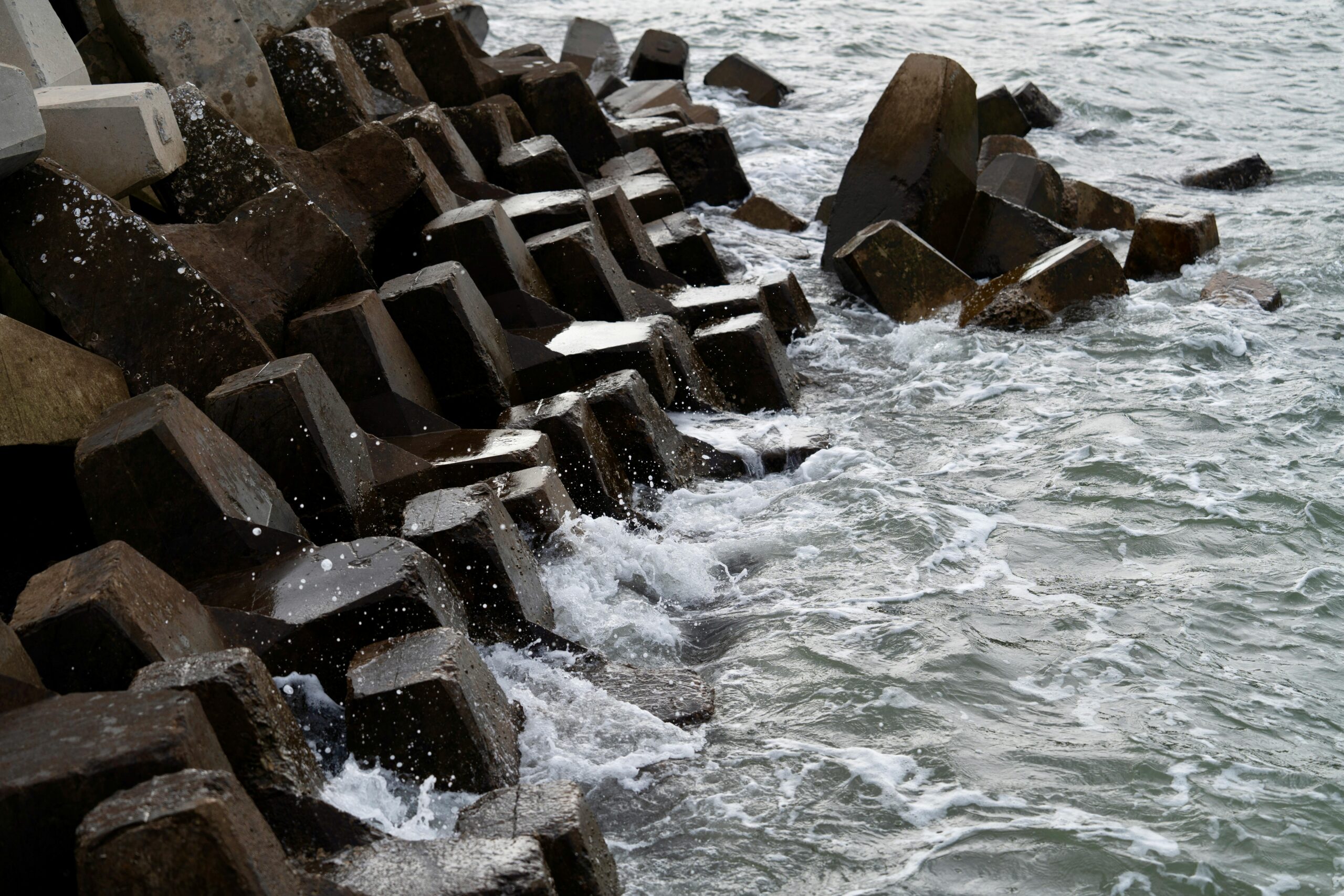
Modular systems offer unprecedented flexibility in coastal protection. These interconnecting units can be configured in various arrangements to address specific site conditions, wave patterns, and protection requirements. Made from reinforced concrete, recycled materials, or advanced polymers, they provide robust defense while remaining manageable for rapid deployment.
Unlike traditional seawalls or revetments that require extensive foundation work, modular units often utilize gravity and interlocking designs for stability. This engineering approach significantly reduces installation time and complexity. Crews with moderate training can assemble protective structures in days, not months.
The aesthetic flexibility of modular systems also addresses community concerns about visual impact. Units can be designed to blend with natural surroundings or incorporate artistic elements that enhance rather than detract from coastal beauty.
🌿 Nature-Based Rapid Solutions
Living Shorelines and Accelerated Vegetation
Nature-based solutions harness ecological processes for coastal protection while providing additional environmental benefits. Living shorelines combine natural materials like oyster shells, coir logs, and strategic vegetation planting to stabilize coastlines and absorb wave energy. These systems can be deployed relatively quickly compared to their effectiveness timeline.
Accelerated vegetation techniques use specially cultivated salt-marsh grasses, mangroves, and dune plants that establish quickly in coastal environments. Pre-grown in nurseries with optimized root systems, these plants can be installed rapidly and begin providing protection within weeks as their roots stabilize sediment and above-ground growth dissipates wave action.
The dual benefits of nature-based solutions make them particularly attractive. Beyond coastal protection, they restore habitat for fish, birds, and other wildlife while improving water quality and sequestering carbon. Communities gain resilience while enhancing ecological health.
Artificial Reef Deployment
Artificial reefs represent another rapid-deployment strategy gaining momentum in coastal resilience planning. Pre-fabricated reef units, designed to mimic natural coral or rock formations, can be positioned offshore to reduce wave energy before it reaches vulnerable shorelines. These structures break up wave action, promote sediment deposition, and create valuable marine habitat.
Modern reef designs incorporate materials that encourage natural colonization by oysters, corals, and other reef-building organisms. Over time, these structures become living components of the coastal ecosystem, providing increasing protection as biological communities establish and grow.
Deployment timelines for artificial reefs vary based on scale and location, but prefabricated systems can be positioned within weeks using marine construction equipment. This speed makes them viable options when communities need intermediate protection while planning longer-term interventions.
📱 Digital Tools Supporting Rapid Response
Technology extends beyond physical barriers to include sophisticated monitoring, modeling, and coordination systems. Digital platforms enable coastal managers to assess threats in real-time, deploy resources efficiently, and coordinate community responses during emergencies.
Geographic Information Systems (GIS) combined with real-time sensor networks provide unprecedented situational awareness. Coastal managers can visualize wave heights, tide levels, erosion rates, and infrastructure vulnerabilities on integrated dashboards. This information drives decision-making about when and where to deploy rapid-response tools.
Predictive modeling software has advanced dramatically, allowing communities to simulate various scenarios and test different protection strategies virtually before committing resources. These tools reduce uncertainty and help optimize deployment strategies for maximum effectiveness.
Communication and Coordination Platforms
Effective coastal resilience requires coordinated action across multiple agencies, organizations, and community groups. Digital communication platforms designed specifically for emergency management facilitate this coordination. They enable rapid information sharing, resource tracking, and collaborative decision-making during critical response periods.
Mobile applications put coastal resilience tools directly in the hands of residents and first responders. These apps can provide evacuation guidance, report damage or erosion, and access educational resources about coastal protection. Empowering communities with information and tools strengthens overall resilience beyond physical infrastructure alone.
💡 Implementation Strategies for Communities
Assessment and Planning Essentials
Successful rapid-deployment strategies begin with thorough assessment of coastal vulnerabilities, assets at risk, and available resources. Communities need clear understanding of their specific threats, whether from gradual erosion, storm surge, or a combination of factors. This knowledge shapes appropriate solution selection.
Vulnerability mapping identifies the most critical areas requiring protection. Not every meter of coastline demands the same level of defense. Prioritization ensures limited resources address the highest-risk areas first, maximizing protection effectiveness and return on investment.
Engaging multiple stakeholders early in planning processes builds consensus and identifies potential obstacles before they become problems. Property owners, environmental groups, emergency managers, and elected officials all bring valuable perspectives that strengthen final strategies.
Building Local Capacity
The effectiveness of rapid-deployment tools depends significantly on local capacity to deploy and maintain them. Training programs that build community expertise ensure systems can be implemented quickly when threats emerge. Cross-training personnel from public works, emergency management, and volunteer organizations creates redundancy and resilience in human resources.
Pre-positioning equipment and materials in strategic locations eliminates delays when rapid response becomes necessary. Communities that maintain inventories of barriers, vegetation supplies, or modular units can respond immediately rather than waiting for procurement and delivery during emergencies.
| Solution Type | Deployment Time | Typical Lifespan | Primary Application |
|---|---|---|---|
| Water-Activated Barriers | Hours to Days | Temporary (days to weeks) | Storm surge, flooding events |
| Modular Units | Days to Weeks | Semi-permanent (years) | Erosion control, wave attenuation |
| Living Shorelines | Weeks to Months | Permanent (with maintenance) | Erosion, habitat restoration |
| Artificial Reefs | Weeks | Permanent | Wave reduction, habitat creation |
| Sand Nourishment | Days to Weeks | Semi-permanent (years) | Beach restoration, buffer creation |
🔧 Overcoming Implementation Challenges
Regulatory Navigation
Coastal environments face complex regulatory oversight from multiple agencies at federal, state, and local levels. Permitting processes can slow even rapid-deployment solutions if not addressed proactively. Communities benefit from establishing relationships with regulatory agencies before emergencies arise, understanding permit requirements, and potentially securing pre-approved plans for rapid implementation.
Some jurisdictions have created streamlined permitting processes specifically for temporary or emergency coastal protection measures. Advocating for these regulatory frameworks where they don’t exist helps entire regions respond more effectively to coastal threats.
Funding and Financial Planning
Financing rapid-deployment coastal protection requires creative approaches beyond traditional infrastructure funding. Grant programs from federal agencies, state coastal management offices, and private foundations increasingly support innovative resilience projects. Communities that maintain shovel-ready plans with completed environmental assessments position themselves advantageously for competitive funding opportunities.
Public-private partnerships offer another funding avenue, particularly when commercial properties benefit from protection efforts. Shared investment models distribute costs while building stakeholder commitment to successful implementation and maintenance.
Insurance premium reductions and property value protection provide compelling economic arguments for coastal resilience investments. Demonstrating these financial benefits helps build political will and community support for funding rapid-deployment solutions.
🌍 Global Success Stories and Lessons Learned
The Netherlands continues leading global innovation in rapid coastal protection, driven by centuries of managing relationship with water. Dutch engineers have pioneered modular barriers, inflatable dams, and integrated flood management systems now adopted worldwide. Their approach combines permanent infrastructure with flexible rapid-response capabilities, providing layered defense against various threat scenarios.
Miami Beach’s comprehensive approach to coastal resilience demonstrates how rapid-deployment tools complement larger infrastructure projects. While the city invests in long-term solutions like pump stations and raised streets, they maintain supplies of temporary barriers and have developed detailed deployment protocols for hurricane threats. This dual approach provides immediate protection while building permanent resilience.
Singapore’s integrated coastal protection strategy showcases how technology, nature-based solutions, and community engagement create comprehensive resilience. Their use of artificial reefs combined with mangrove restoration and sophisticated monitoring systems exemplifies best practices in rapid coastal protection implementation.
Transferable Insights for Any Community
Successful coastal resilience programs share common characteristics regardless of geographic location or community size. Early stakeholder engagement builds support and identifies potential obstacles. Multi-layered approaches combining different protection strategies provide redundancy when individual systems face unexpected challenges.
Regular testing and training ensure rapid-deployment systems function as intended when emergencies strike. Communities that conduct annual or seasonal deployment exercises maintain proficiency and identify equipment or procedural issues in low-stakes environments.
Adaptive management recognizes that coastal conditions and threat profiles change over time. Regular reassessment of vulnerabilities and solution effectiveness allows communities to adjust strategies, adopt new technologies, and maintain optimal protection as circumstances evolve.
🚀 The Future of Rapid Coastal Protection
Emerging technologies promise even more effective and accessible rapid-deployment solutions. Advanced materials science is producing lighter, stronger, and more durable components for protective systems. Biomimicry—learning from natural coastal protection mechanisms—inspires innovative designs that work with rather than against natural processes.
Autonomous systems and robotics may soon enable rapid deployment with minimal human intervention in dangerous conditions. Drones for damage assessment, autonomous vehicles for barrier positioning, and remote monitoring systems will enhance both speed and safety of coastal protection efforts.
Artificial intelligence and machine learning applications are revolutionizing predictive capabilities. These technologies analyze vast datasets to forecast coastal threats with increasing accuracy, providing more lead time for protective measure deployment and better allocation of limited resources.
Climate change ensures coastal resilience will remain a critical challenge for decades to come. Communities investing now in rapid-deployment capabilities position themselves to protect residents, infrastructure, and economic vitality against intensifying coastal threats. The technologies and strategies exist—what’s needed is commitment to implementation and continuous improvement.
🤝 Building Resilient Coastal Communities Together
Coastal resilience transcends physical infrastructure to encompass social cohesion, economic adaptability, and environmental stewardship. Rapid-deployment tools provide critical protection, but their effectiveness multiplies when embedded within comprehensive community resilience strategies that address all these dimensions.
Education and awareness programs ensure residents understand coastal risks and know how to respond when threats emerge. Community-based monitoring programs engage citizens in observing coastal conditions, reporting changes, and participating in protection efforts. This engagement builds social capital that proves invaluable during emergencies.
The path forward requires collaboration across disciplines, sectors, and communities. Engineers, ecologists, social scientists, emergency managers, and community leaders each contribute essential expertise to effective coastal resilience. Breaking down silos and fostering integrated approaches unleashes innovation and creates solutions greater than the sum of their parts.
Coastal communities stand at a crossroads. The challenges are significant, but so are the opportunities. Rapid-deployment coastal protection tools offer hope and practical solutions for vulnerable shorelines worldwide. By embracing innovation, building capacity, and fostering collaboration, communities can protect their coasts, their residents, and their futures against rising waters and intensifying storms. The technology exists, the knowledge is available, and the imperative is clear—the time for action is now.