Seaweed farming is emerging as a game-changer for coastal communities worldwide, offering an affordable entry point into sustainable aquaculture that generates meaningful income while protecting marine ecosystems.

🌊 The Rising Tide of Seaweed Economics
The global seaweed industry has experienced remarkable growth over the past decade, with market valuations exceeding $16 billion and projections suggesting it could reach $30 billion by 2030. What makes this particularly exciting for coastal communities is that seaweed farming requires minimal startup capital compared to traditional aquaculture or agriculture. Unlike fish farming that demands expensive equipment and constant monitoring, seaweed cultivation works with nature’s rhythms, making it accessible to families with limited resources.
Coastal populations have long struggled with economic uncertainty. Traditional fishing yields have declined due to overfishing and climate change, forcing communities to seek alternative livelihoods. Seaweed farming presents a practical solution that complements rather than replaces existing maritime activities. Fishers can integrate seaweed cultivation into their routines, creating a diversified income stream that provides stability during off-seasons or when fish stocks are low.
Breaking Down the Startup Costs
One of the most compelling aspects of seaweed farming is its affordability. Initial investments typically range from $500 to $2,000 for a small-scale operation, depending on location and farming method. This includes basic materials like ropes, floats, anchors, and seedlings. Compare this to traditional agriculture where land acquisition alone can cost tens of thousands of dollars, or fish farming where tanks, filtration systems, and feed represent substantial expenses.
The low barrier to entry means that even the most economically disadvantaged coastal families can participate. Microfinance organizations and development agencies have recognized this potential, creating tailored loan programs specifically for seaweed farmers. Many of these programs offer favorable terms with grace periods aligned to harvest cycles, ensuring farmers aren’t burdened with repayment before their first income arrives.
Essential Equipment and Materials
- Cultivation ropes (typically made from polypropylene or biodegradable materials)
- Floating buoys to keep lines at optimal water depth
- Anchoring systems to secure farms against currents and waves
- Seaweed seedlings or vegetative fragments for propagation
- Basic boats for maintenance and harvesting (often already owned by fishing families)
- Drying racks or platforms for post-harvest processing
Multiple Species, Multiple Opportunities 🌿
The diversity of commercially valuable seaweed species allows farmers to choose varieties best suited to their local conditions and market demands. Brown seaweeds like kelp and Sargassum are prized for their alginates used in food processing and cosmetics. Red seaweeds such as Eucheuma and Gracilaria produce carrageenan and agar, essential ingredients in everything from ice cream to pharmaceuticals. Green seaweeds like sea lettuce are gaining popularity in gourmet food markets and animal feed.
This diversity also provides risk management. Farmers can cultivate multiple species, protecting themselves against market fluctuations or environmental conditions that might affect one variety. In Southeast Asian countries like Indonesia and the Philippines, farmers commonly grow Eucheuma cottonii and Eucheuma spinosum simultaneously, ensuring at least one harvest succeeds even during challenging seasons.
The Growing Cycle: From Seedling to Harvest
Seaweed farming follows relatively straightforward procedures that can be learned quickly. Most species reach harvestable size within 45 to 90 days, allowing for multiple harvests per year. This rapid turnover means farmers see returns on their investment much faster than with traditional crops that might take an entire season or longer to mature.
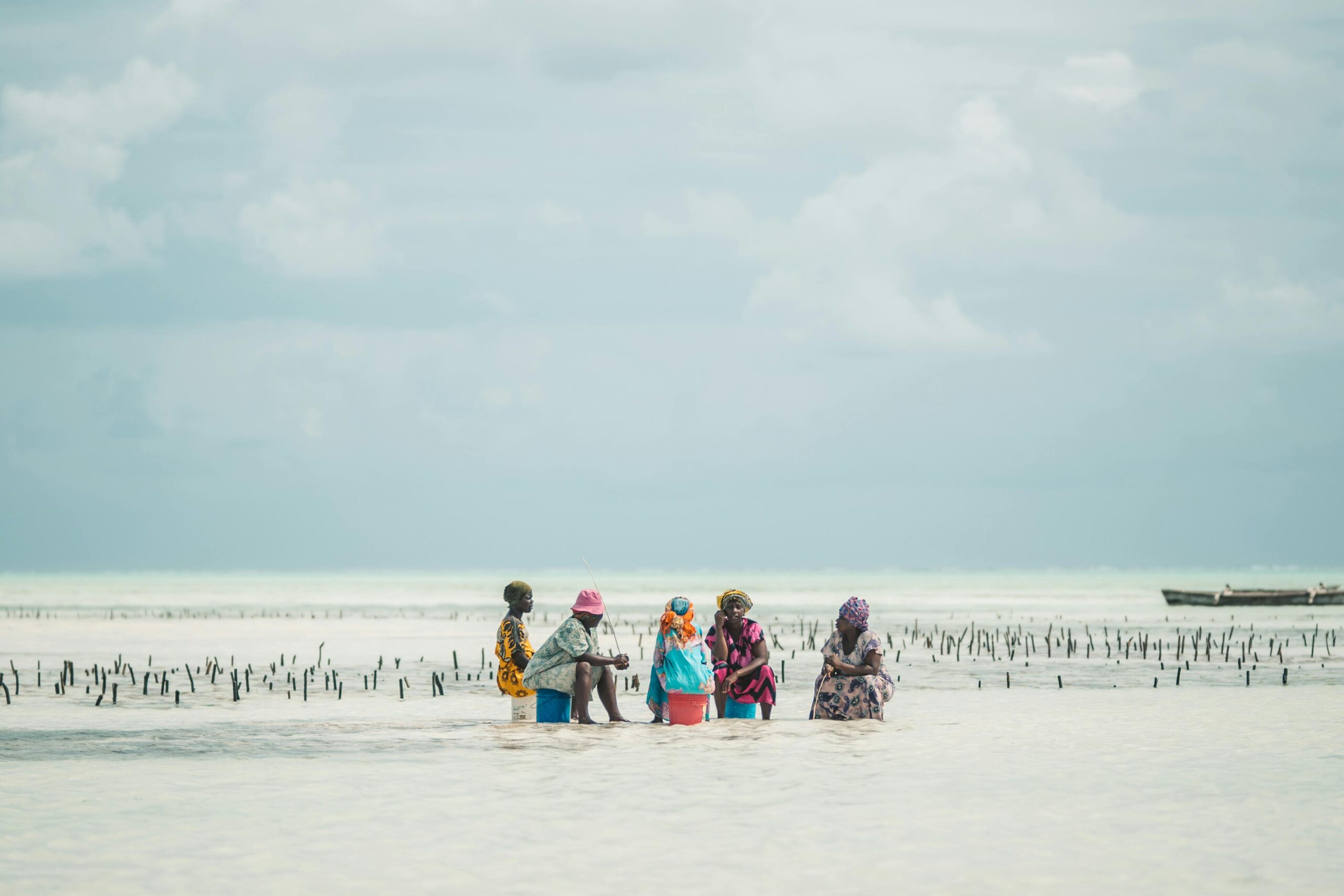
The cultivation process begins with obtaining seedlings, either from natural stocks, tissue culture laboratories, or vegetative cuttings from previous harvests. These are tied to horizontal lines suspended in the water column, typically 0.5 to 1 meter below the surface where light penetration supports optimal growth. The seaweed absorbs nutrients directly from seawater, requiring no fertilizers or freshwater inputs—a massive advantage in regions where these resources are scarce or expensive.
Maintenance during the growing period is minimal but important. Farmers periodically check their lines, removing unwanted algae or debris and ensuring the structure remains secure. This work can be done from small boats or even by wading in shallow farms, requiring no specialized vessels. The simplicity of these tasks means entire families can participate, creating employment opportunities across age groups and skill levels.
Harvest and Post-Harvest Activities
Harvesting involves cutting mature seaweed from the lines and transporting it to shore for processing. The most common preservation method is sun-drying, which requires only space and sunny weather—both abundant in most coastal regions. Dried seaweed loses approximately 85-90% of its fresh weight, making it much easier and cheaper to transport and store. This natural preservation extends shelf life to several months, giving farmers flexibility in timing their sales to maximize prices.
Some communities have established cooperative processing facilities where members can access more advanced equipment for producing higher-value products. Semi-refined carrageenan, for example, fetches significantly higher prices than raw dried seaweed. These cooperatives spread equipment costs across many farmers while building local processing capacity that retains more value within the community.
💰 Income Potential and Economic Impact
The financial returns from seaweed farming can be substantial relative to the initial investment. Small-scale farmers typically manage farms of 0.5 to 2 hectares, which can generate annual gross incomes ranging from $2,000 to $15,000 depending on species, location, market access, and number of harvest cycles completed. In regions where average annual incomes hover around $1,000-$3,000, seaweed farming represents a significant boost to household finances.
Case studies from Tanzania show seaweed farmers earning between $500 and $1,500 per harvest cycle, with experienced farmers completing three to four cycles annually. In Indonesia, the world’s largest seaweed producer, smallholder farmers have lifted themselves out of poverty through dedication to cultivation. The Philippines has similar success stories, with coastal municipalities transforming their economic prospects through organized seaweed farming cooperatives.
| Region | Primary Species | Average Income per Hectare/Year | Harvest Cycles per Year |
|---|---|---|---|
| Southeast Asia | Eucheuma cottonii | $4,000 – $8,000 | 3-4 |
| East Africa | Eucheuma spinosum | $2,500 – $5,000 | 3-4 |
| Pacific Islands | Mixed species | $3,000 – $7,000 | 3-5 |
| Atlantic Coast | Gracilaria | $5,000 – $10,000 | 4-6 |
Environmental Benefits: Growing Green Income 🌍
Beyond economic advantages, seaweed farming delivers remarkable environmental benefits that enhance its long-term sustainability. Seaweeds absorb carbon dioxide and nitrogen from seawater, helping mitigate ocean acidification and reduce nutrient pollution from coastal runoff. Each hectare of seaweed farm can sequester several tons of carbon dioxide annually, making it a nature-based climate solution that generates income while fighting global warming.
Seaweed farms also create habitat for marine life. Fish, crustaceans, and other organisms shelter among the cultivation lines, increasing local biodiversity. This ecosystem service can actually improve catches for fishers working near seaweed farms, creating synergies between aquaculture and traditional fishing. The farms act as artificial reefs, providing structure in sandy or featureless bottoms where marine life would otherwise be scarce.
The nitrogen absorption capacity of seaweed addresses a critical environmental challenge in many coastal areas. Agricultural runoff and sewage discharge create nutrient-rich water that fuels harmful algal blooms and oxygen-depleted dead zones. Seaweed farms positioned strategically can intercept these nutrients, converting pollution into valuable biomass while cleaning the water. Several pilot projects in Europe and North America are exploring integrated systems where seaweed farms work alongside fish farms or near river mouths to capture excess nutrients.
Market Diversity: Who’s Buying Seaweed?
The expanding seaweed market encompasses numerous industries, providing farmers with diverse sales channels. The food industry remains the largest consumer, using seaweed in traditional Asian cuisines and increasingly in Western health foods, plant-based alternatives, and functional ingredients. Nori, wakame, and kombu command premium prices in Japanese, Korean, and Chinese markets, while sea lettuce and dulse are finding audiences among health-conscious consumers in Europe and North America.
Hydrocolloid extraction for carrageenan, agar, and alginate represents another major market segment. These compounds are ubiquitous in processed foods as thickeners, stabilizers, and gelling agents. The cosmetics industry uses seaweed extracts for their hydrating properties and mineral content. Even the pharmaceutical sector sources specific compounds from seaweed for various applications.
Emerging markets add exciting new dimensions to seaweed economics. Animal feed supplements derived from seaweed can reduce methane emissions from cattle while improving animal health. Agricultural biostimulants made from seaweed extracts enhance crop growth and stress resistance. Biodegradable packaging materials, bioplastics, and biofuels all show promise as future outlets for seaweed biomass, potentially creating exponential market growth.
Building Market Connections
Successful seaweed farming requires not just production but also market access. Farmers benefit enormously from cooperative arrangements that provide collective bargaining power and connections to buyers. Individual farmers often lack the volume, quality consistency, or business networks to reach high-value markets, but organized groups can meet buyer requirements and negotiate better prices.
Digital platforms are increasingly connecting seaweed farmers directly with buyers, eliminating intermediaries who traditionally captured much of the profit margin. Mobile apps help farmers access market prices, weather forecasts, and cultivation advice. While specific applications vary by region, technology is democratizing information that was once available only to large commercial operations.
🚀 Scaling Up: From Household to Enterprise
Many successful seaweed farmers begin with small experimental plots before expanding their operations. This graduated approach allows them to develop skills, understand local conditions, and build market relationships without risking significant capital. As confidence and capacity grow, farmers can expand their cultivation areas, diversify species, or invest in processing equipment to add value to their product.
Some entrepreneurial farmers transition from primary production to becoming seedling suppliers, providing starting material to other cultivators. Others develop processing businesses, purchasing raw seaweed from multiple farmers and producing refined products. These vertical integration opportunities create economic multiplier effects within coastal communities, generating employment beyond direct farming activities.
Youth engagement represents a particularly promising aspect of seaweed farming’s expansion. Young people in coastal areas often migrate to cities seeking economic opportunities, depleting communities of their most productive demographic. Seaweed farming’s profitability and growth potential can retain youth in their home communities, bringing education and innovation to traditional maritime economies. Training programs targeting young farmers emphasize business skills, quality control, and sustainability alongside cultivation techniques.
Challenges and Solutions on the Horizon
Despite its many advantages, seaweed farming faces challenges that require attention and innovation. Climate change impacts like warming waters, ocean acidification, and intensifying storms threaten cultivation. Disease outbreaks can devastate farms, particularly in areas with high cultivation density. Market price volatility creates income uncertainty, especially for farmers dependent on single-species cultivation or narrow market channels.
Research institutions and development organizations are actively addressing these challenges. Breeding programs develop seaweed varieties with enhanced heat tolerance, faster growth, and disease resistance. Best practice guidelines help farmers implement biosecurity measures that reduce disease transmission. Diversification strategies and cooperative marketing arrangements buffer farmers against price fluctuations.
Access to finance remains a barrier in some regions where lenders lack familiarity with seaweed farming as an economic activity. Educational efforts targeting financial institutions demonstrate the viability and risk profile of seaweed cultivation, gradually building lending capacity. Government support through subsidies, training programs, and infrastructure development accelerates industry growth in countries recognizing seaweed farming’s potential.
Women Leading the Seaweed Revolution 👩🌾
Women comprise the majority of seaweed farmers in many regions, finding in this activity an opportunity for economic empowerment. The flexible schedule of seaweed farming allows women to balance cultivation with household responsibilities. The physical demands, while real, are manageable without requiring the same strength often associated with traditional fishing or agriculture.
In Zanzibar, Tanzania, seaweed farming has transformed women’s economic and social status. Female farmers have gained financial independence, enabling them to invest in their children’s education, improve housing, and participate more fully in community decision-making. Similar patterns appear across Southeast Asia, where women’s seaweed farming cooperatives have become engines of rural development and gender equity.
Organizations supporting women seaweed farmers emphasize not just production training but also financial literacy, business management, and leadership development. This holistic approach recognizes that sustainable economic empowerment requires more than technical skills—it demands confidence, networks, and knowledge to navigate markets and institutions.
Getting Started: Practical Steps for Aspiring Farmers
For coastal communities interested in exploring seaweed farming, several practical steps can facilitate entry into this livelihood. Begin by researching which seaweed species thrive in local waters and have established markets. Connect with existing farmers or agricultural extension services to learn from their experience. Many countries have seaweed farmer associations that welcome new members and provide mentorship.
Secure any necessary permits or approvals for using marine space. Regulatory requirements vary widely between countries, from simple registrations to formal lease agreements. Understanding these requirements upfront prevents future complications. Identify appropriate farming sites with adequate water circulation, suitable depth, and protection from extreme weather while avoiding conflicts with navigation channels or conservation areas.
Start small with a pilot project that allows learning without excessive risk. A few lines of seaweed provide valuable lessons about local growing conditions, maintenance requirements, and harvest procedures. Document observations about growth rates, challenges encountered, and solutions discovered. This information becomes invaluable when scaling up operations.
Establish market connections before expanding production. Visit potential buyers, understand their quality requirements and purchasing processes. Join or form cooperatives that can aggregate production and negotiate collectively. Consider value-addition opportunities available locally that might increase income beyond selling raw dried seaweed.
🌟 Seaweed Farming as Community Development
The true potential of affordable seaweed farming extends beyond individual household income to community-level transformation. Successful seaweed farming areas develop supporting industries—boat repair services, rope suppliers, processing facilities—that create additional employment and economic diversification. Community infrastructure improves as tax revenues increase and farmers reinvest profits locally.
Educational opportunities expand when families can afford school fees and materials. Health outcomes improve with better nutrition and healthcare access funded by farming income. Social cohesion strengthens through cooperative arrangements that require collaboration and mutual support. These ripple effects amplify seaweed farming’s direct economic impact, making it a comprehensive development strategy rather than merely an income-generating activity.
Environmental consciousness often increases in communities engaged in seaweed farming. Farmers recognize their dependence on healthy marine ecosystems and become advocates for ocean conservation, sustainable fishing practices, and pollution reduction. This shift in perspective creates powerful constituencies for environmental protection in regions where conservation messaging might otherwise meet resistance.
The Future is Blue and Green
Looking ahead, seaweed farming stands poised for continued expansion as markets grow and technology improves. Innovations in cultivation methods, such as offshore farms in deeper waters or integrated multi-trophic aquaculture combining seaweed with fish and shellfish, promise increased productivity and sustainability. Genetic research will yield improved varieties optimized for specific conditions and end uses.
Policy attention to blue economy development increasingly recognizes seaweed farming as a key component. International development organizations, national governments, and private sector actors are investing in infrastructure, research, and capacity building to support industry growth. This convergence of interest creates opportunities for coastal communities to position themselves advantageously in emerging seaweed value chains.
The intersection of climate action and economic development makes seaweed farming particularly relevant for the coming decades. As the world seeks nature-based solutions to environmental challenges while lifting communities out of poverty, few options offer seaweed farming’s combination of carbon sequestration, ecosystem benefits, and income generation. Coastal regions embracing this opportunity today position themselves as leaders in the blue-green economy of tomorrow.
Seaweed farming represents more than an economic opportunity—it embodies a vision of sustainable development where human prosperity and environmental health reinforce rather than contradict each other. For coastal communities worldwide, the potential truly is in the sea, waiting to be cultivated, harvested, and transformed into brighter futures.